Language, neuroscience, and cinema come together for this unique evening at the Frontline Club showcasing the work of ethnographic filmmaker and sound artist Vincent Moon, in collaboration with A World Without Words.
A World Without Words is a project by writer and filmmaker Lotje Sodderland, with poet and curator SJ Fowler and artist and material engineer Thomas Duggan, inviting audiences to engage with the nature of human language. With a series of events around London, including exhibitions, screenings and performances, A World Without Words calls into question how meaning maps into the brain.
A selection of Vincent Moon’s short observational documentaries — shot around the world and capturing local folklore and diverse musical rituals — will be screened in alternation with an informal discussion by the director of London’s Institute of Philosophy Dr Barry Smith.
Dr Smith will explore the neural correlates of meaning, music, and language in the context of each film, to offer the audience an explanation of the role of language in subjective mental life.

From Sufi rituals in Chechnya, to ancient folk songs in Columbian’s pacific rainforest; from an Eastern Orthodox family portrait in Tbilisi, to shamanic healing songs in Peru, we will experience how the brain ascribes meaning to music and sound – even when words are obsolete.
The film lineup:
Le Grand Jihad (8 min) – A Sufi ritual in Chechnya
Nur-Zhovkhar (9 min) – Folk songs from Chechnya
Belogorskiy – (12 min) A rare liturgy in Russia’s hidden cave monastery
L’école du Vent – (7 min) Contemporary maestros of Azerbaijan
Erdm Ensemble – (12 min) Songs from Kalmoukie
A portrait of Justina – (16 min) A shipibo shaman in Peru healing villagers with song and ayahuasca

Vincent Moon is a French independent filmmaker and sonic ethnographer who rose to prominence with the Blogotheque’s Take Away Shows, a web-based project recording field work music videos of indie rock musicians as well as some notable mainstream artists including Tom Jones and Arcade Fire. In recent years the focus of his work has been documenting local folklore, sacred music, and religious rituals worldwide for his label Petites Planètes, amassing a vast collection of rare recordings.
 Dr Barry Smith is a professor of philosophy and director of London’s Institute of Philosophy, a partner in the Sensory Research Network (Toronto, MIT, Harvard, Glasgow), and co-director and founder of the Centre for the Study of the Senses in the University of London which pioneers collaborative research between philosophers, psychologists, and neuroscientists. He appears frequently on BBC Radio and writes for mainstream publications on self-knowledge, and the philosophies of language and mind. In 2010, he was the writer and presenter of a four-part series for the BBC World Service called The Mysteries of the Brain.
]]>

One World Echoes in London is a series of human rights film screenings supported by by the Czech Centre London. Celebrating the 15th anniversary of One World, Europe´s largest human rights film festival established in Prague in 1998 by the Czech NGO People in Need. This series offers a selection of extraordinary documentary films exploring societies and individual lives from a human rights perspective. Representing various countries where People in Need, the biggest NGO in Eastern Europe, runs its human rights, relief and development projects.
One World Echoes are co-organised by the Czech Centre London, Open City Docs Fest London 20-23 June 2013 and the Frontline Club.
Thursday 11 April 2013, 7:00 PM Frontline Club – Amazing Azerbaijan!
 Amazing Azerbaijan! is a tale of two countries. A shiny democratic republic the government proudly puts on display for visiting journalists and dignitaries. Alongside a repressive and corrupt state with no respect for freedom of expression, where peaceful protesters are violently beaten and journalists are threatened or even killed. Followed by a Q&A with director Liz Mermin.
Friday 24 May 2013, 7:00 PM Frontline Club – Motherland or Death
 For over fifty years Cuba has been following the battle-cry of the revolution, Patria o Muerte, which translates as Motherland or Death. Veteran Russian documentarian Vitaly Mansky centers on the generation born before the revolution. They are devoted to their motherland with heart and soul, yet curse the circumstances in which they are forced to live.
Wednesday 19 June 2013, 7:00 PM Frontline Club – Fortress BOOK NOW
 Over twenty years after the collapse of the Soviet Union directors Klára Tasovská and Lukáš Kokeš travel back in time on their visit to the unrecognised Pridnestrovian Moldovian Republic. A separatist region within Moldova, with its own passports, an elected president and a legal system. This Open City Preview Screening will be followed by a Q&A with director Lukáš Kokeš.
Sunday 23 June 2013 2:30 PM Preview screening Open City Cinema Tent – Black Out BOOK NOW
 Every evening during exam season in Guinea, hundreds of school children begin a nightly pilgrimage to the airport, petrol stations and wealthier parts of the city, searching for light. A literal and metaphorical journey to enlightenment, this evocative documentary tells how children reconcile their lives in one of the world’s poorest countries, with their desire to learn.
Sunday 23 June 2013 5:00 PM UK Premiere Open City Lighbox – Stone Games BOOK NOW
 Do the Sudeten Germans who were tortured and killed during their expulsion at the end of the Second World War deserve a commemorative monument or not? In response to a stone monument in Nový Bor, Czech Republic a group of local inhabitants has unleashed a hate-filled ritual dance of national fervor and moral outrage that also turns out to be a sufficiently strong election issue.


The screening of “Amazing Azerbaijan!” on Thursday, 11th April was followed by a Q&A with the film’s director Liz Mermin. The film contrasts the two-faced Azerbaijan: on one hand there was the glamour before and during Eurovision, carefully constructed by the government; the other side is that investigative journalists like Khadija Ismayilova regularly get persecuted for speaking up for democracy.

The documentary journalist and film director Liz Mermin gives the public an insight into how she gathered the footage.
Before opening up the debate, Mermin summarised the discrepancy between official Western thinking and the struggles of ordinary people: “Eurovision was being used by the government to say ‘look, we are European. We are Western and just between evil Russia and Eastern Iran.'”
To enrich her portraits about activists and exiles, Mermin spent ten days in Azerbaijan and tried to talk to government and industry officials.
“It was very difficult to get a journalist visa. It came through the night before we got on the plane. I was told I was given interviews with high ministers but none of those happened.”
After a member of the public addressed the lack of international interest in corruption and an anti-democratic governmental expenditure, the director explained:
“Crucial EU players don’t want to be part of these conversations because they have nothing to gain from it. We need people in power to get embarassed by what they are doing.”
Another issue that prevents extensive European attention and coverage is the EU’s dependency on Azerbaijani oil and energy supplies. BP also “wasn’t very interested in talking to me, for obvious reasons.” As a result, the film gave a platform to some of the country’s most passionate and aggressive activists, bloggers and intellectuals.

Liz Mermin answers questions from the public and calls for a higher mainstream media coverage of the Azerbaijan conflict.
A member of a human rights organisation in the audience pointed out that:
“it is hard to stand up for the wrongdoings in these countries when, often, western governments are guilty of similar things. I’m thinking about the ongoing Guantanamo debate for example.”
The hunger strike of the Bay’s strikers has been classified as “potentially deadly” on Thursday.
This screening of “Amazing Azerbaijan!” was part of One World Echoes, an international tour celebrating the 15th anniversary of One World, Europe’s largest human rights film festival, established in Prague in 1998 by Czech NGO People in Need. The London Echoes are co-organized by the Czech Centre London, Open City Docs Fest (London 20-23 June 2013) and The Frontline Club. On Friday 24 May, Frontline will show “Motherland or Death”, a screening about Cuba. Further details tbc.
]]>
Azerbaijan is like a dynamic eagle that naturally links the cultures of the West and the East – that is how the state and local representatives attempt to portray the country internationally. Skyscrapers are growing in a country rich in oil, Azerbaijan has joined the UN Security Council and President Ilham Aliyev presses the flesh with some of the world’s most important statesmen.
Amazing Azerbaijan! is a tale of two countries: one a shiny democratic republic the government proudly puts on display for visiting journalists and dignitaries. The other country is a repressive and corrupt state with no respect for freedom of expression, in which peaceful protesters are violently beaten and journalists are threatened or even killed.
The excitement around Eurovision 2012 hosted in Baku, offers an unorthodox lens through which director Liz Mermin investigates basic issues of human rights and the position of journalists in this dynastic republic ruled by the Aliyev family since 1993.
Directed by Liz Mermin
Duration: 60′
Year: 2012
This screening is part of One World Echoes, an international tour celebrating the 15th anniversary of One World, Europe´s largest human rights film festival established in Prague in 1998 by Czech NGO People in Need.
One World Echoes are co-organized by the Czech Centre London, Open City London Documentary Festival (20-23 June) and the Frontline Club.
It’s one of the most corrupt countries in the world and widely criticised for its human rights record but this year Azerbaijan is hosting Eurovision – one of the most glitzy TV music competitions in the world.
But what do we really know about Azerbaijan? What impact will this glitter invasion have on a country unused to being on the international stage? This oil-rich former Soviet republic bordering Iran, Turkey and Russia is undergoing rapid modernisation, forging strong new ties with Europe while retaining its roots in the East.
As Eurovision prepares to come to town, we find out what makes this country tick – exploring Azerbaijan’s rich cultural heritage through the eyes of our Azeri speaking presenter. From music to food, from the winding streets of the old city to the soaring skyscrapers of the modern town.
It’s a country of contrasts and contradictions.
With Eurovision pointing the international spotlight on Azerbaijan young Azeris are hoping for more freedom of expression and genuine moves to democracy. But how realistic is this?
We talk to the bloggers and flashmobbers at the forefront of calls for change – and we put their concerns to an MP.
We find out why the war with Armenia 20 years ago still casts a long shadow – to the point where Armenia has pulled out of the contest.
We look at the challenges of hosting an event like this and ask Eurovision officials whether it should be held here at all.
Duration: 50′
]]>
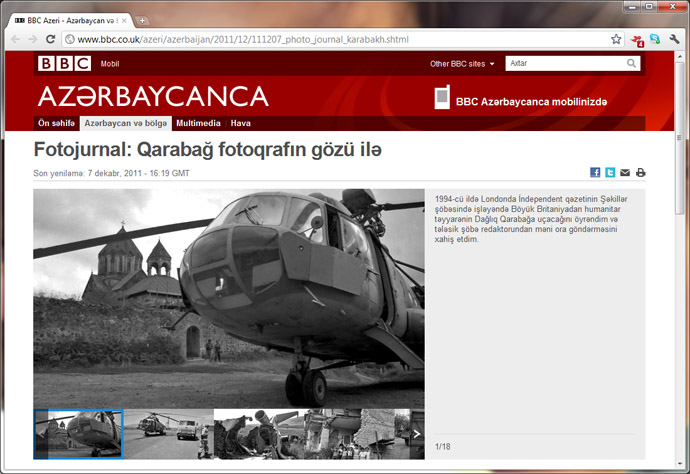
The BBC’s Azerbaijani Service has published a gallery of my photographs taken in the disputed territory of Nagorno Karabakh in 1994. Over 25,000 people were killed in the war waged in the early 1990s and a million forced to flee their homes. Since a ceasefire agreement was signed in 1994 attempts to mediate a peace deal through the OSCE Minsk Group have faltered and The Economist recently put the number of deaths on the front line since then at 3,000. Below is the English text from which the captions were taken and translated into Azerbaijani:
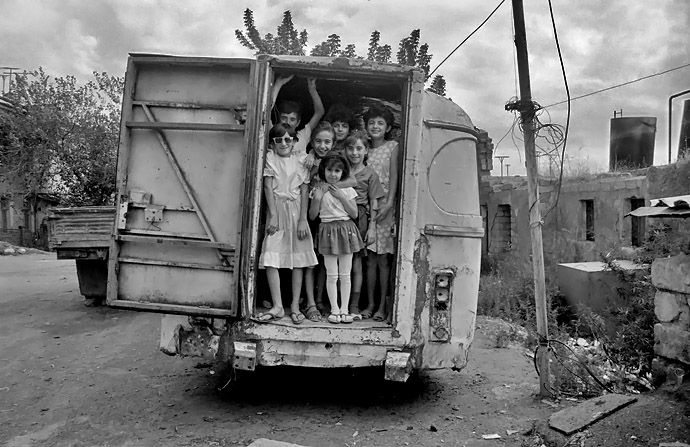
Nagorno Karabakh © Onnik Krikorian 1994
The Black Garden Revisited
When news of a humanitarian flight leaving the UK for Nagorno Karabakh reached me while working on the Picture Desk of The Independent in London in 1994, I jumped at the chance to request that the newspaper’s Picture Editor send me with it. He agreed, and in August I made my first ever trip to Armenia and the South Caucasus. The ceasefire between Armenia and Azerbaijan had been signed just months earlier and some analysts and international observers were warning that a new offensive might start within days or weeks, breaking the fragile armistice.
It didn’t, but the journey from Armenia to Karabakh was still perilous at times with the military helicopter carrying journalists and aid workers seemingly destined to smash into the side of a mountain at one point when it had no choice but to hug the terrain after a radio message warned of Azerbaijani jets in the vicinity. Yet, it wasn’t so much the military situation that interested me, but the people. More significantly, perhaps, it was the people on both sides whose hopes for a lasting peace have been continually dashed by nearly 18 years of political manipulation and intrigue.
Back then, the military buffer zone was called just that. There was no reference to the territories as ‘liberated’ by the Armenian side, even in interviews we held with the then Armenian Defense Minister, the late Vazgen Sargsyan who was assassinated in 1999. Then, just as they remain on the official level today, they were seen simply as a bargaining chip in ongoing negotiations to determine the final status of the disputed territory. Back then, there was actually hope that a negotiated settlement could be reached, ushering in a new period of peace and stability for Armenians and Azerbaijanis in the South Caucasus.
Yet, accompanied as we were for some of the trip by the Armenian writer Zori Balayan, one of the main nationalist agitators in Armenia and Karabakh, another line was also spun: that of Armenians and Azerbaijanis being destined to remain enemies without any common ground. However, when two journalists from Time magazine and I heard that Azerbaijani Prisoners of War (PoWs) were being held on the floor of a hospital in the Karabakh capital we successfully managed to escape the organized press tour and stumbled upon something remarkable.
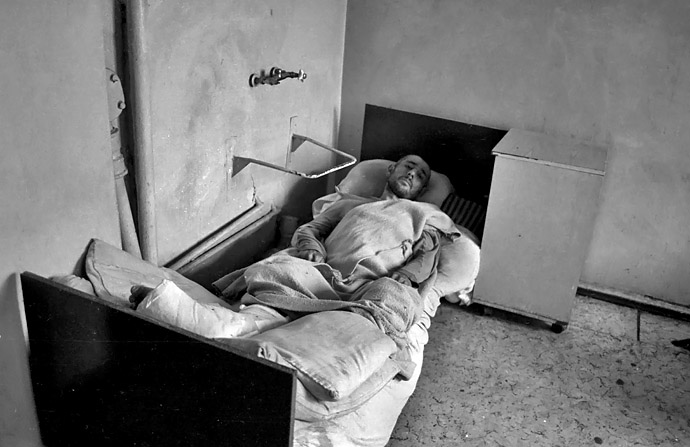
Azerbaijani Prisoner of War (PoW), Nagorno Karabakh © Onnik Krikorian 1994
In addition to the PoWs, who like many of their Armenian counterparts had been conscripted against their will, Azerbaijani civilians were also being held for exchange with Armenians taken hostage by the other side. Among them were children. Many, in fact, or at least until we discovered that not all of them were Azerbaijanis. They also included Armenians who had been allowed to play with the captives in an otherwise free environment. Until this day I remember being unable to tell them apart, and usually when I find myself observing the interaction between Armenians and Azerbaijanis at events held in Georgia and elsewhere.
And it’s true. Ethnic Armenians and Azeris are able to coexist together in countries outside the conflict zone, and they share much in common. While in Nagorno Karabakh in 1994 I photographed an Armenian wedding, for example, but the most recent marriage I shot was in 2009 in the ethnic Azeri village of Karajala in Georgia. Both, as well as every Armenian wedding in between, has been pretty much identical – from the food down to the music. I’ve also been working on documenting those villages in Georgia with a mixed ethnic Armenian and Azeri population and where both speak the other’s language.
That’s not to ignore the pain and suffering experienced by both sides in the conflict, but simply to say that in the years since the 1994 ceasefire it’s become more and more difficult for me to view the conflict as an ethnic one. Instead, and while nationalists and politicians on both sides appear to manipulate the conflict by insisting that it is, my main problem still remains being unable to tell most Armenians and Azerbaijanis apart. This is especially true for the children, which leads me on to my personal favorite photograph taken in Karabakh in 1994.
It was of a little girl, Gayaneh, close to Aghdam in the village of Khrmort. Aged well beyond her years with an expression scarred by the horrors of war, she broke into a smile only when I stuck my tongue out her from behind the camera. As she did so it was then that I found myself hoping that a lasting peace would come to the region. Unfortunately for Gayaneh and myself, as well as new generations in Armenia and Azerbaijan who are unable to remember the time when both sides did live peacefully together, we’re both still waiting…
—
Onnik Krikorian is a journalist and photographer from the UK based in Yerevan, Armenia. He is also the Caucasus editor for Global Voices Online and his own personal project amplifying alternative narratives on the Nagorno Karabakh conflict is at http://peace.oneworld.am. Follow the project on Twitter at @caucasusproject or join the Facebook Page at http://www.facebook.com/ConflictVoices.
The BBC Azeri gallery is at Fotojurnal: Qarabağ fotoqrafın gözü ilə.
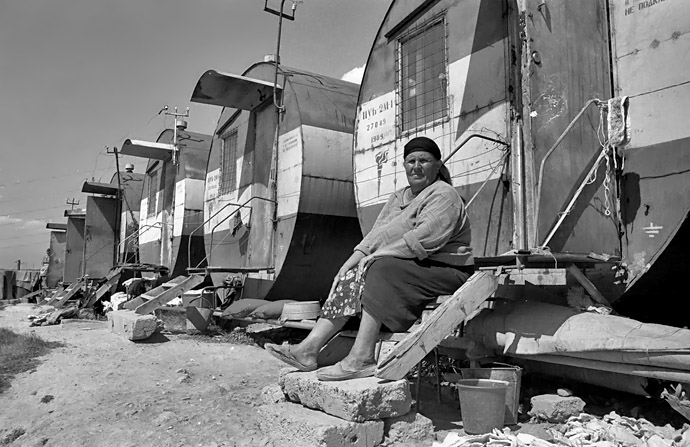
Refugee from Nagorno Karabakh, Armenia © Onnik Krikorian 1994
By Nicole Hunt
Though it’s sometimes difficult to keep track of which Silvio Berlusconi trial is currently in court, Monday sees the resumption of the most infamous of his four cases, in which he faces charges for abuse of power and paying for underage sex. The Italian Senate has approved a motion to move the case from Milan’s court to a special minister’s court, but the case remains in Milan while the Constitutional Court mulls the Senate’s request.
The Council of Europe Parliamentary Assembly opens, with more attention than usual being paid this time around. On Tuesday, the Assembly debates a motion that would recommend taking action against pre-natal sex selection in Europe, particularly in Albania, Armenia, Azerbaijan and Georgia, where the ratio of girls to boys in the population is dropping. On Thursday, Palestinian Authority President Mahmoud Abbas addresses the assembly.
Following a meeting of Eurogroup Finance Ministers on Monday, all EU Finance Ministers convene in Luxembourg on Tuesday, with the focus, as with many things this week, squarely on Greece. Discussions are also expected on an EU financial transaction tax, after the European Commission published proposals last week.
In direct response to the austerity measures being so closely watched by the European Finance Ministers, Greek public sector workers hold a 24-hour strike on Wednesday, calling the cuts ‘barbaric’. A general strike is also planned for 19 October.
Meanwhile, in Brussels, German Chancellor Angela Merkel attends the weekly meeting of the European College of Commissioners. At NATO headquarters, NATO Defence Ministers hold a regular meeting to discuss operational issues, with Libya topping the agenda.
Former Bosnian-Serb Army Commander Ratko Mladic is back in court in The Hague on Thursday. Since his last appearance on 25 August, Mladic’s lawyers have requested the names of all 7,000 victims of the Srebrenica massacre as part of their opposition to the indictment.
In Johannesburg, the African National Congress’ disciplinary committee resumes hearing the charges against controversial youth leader Julius Malema, who is accused of interrupting an ANC Officials meeting alongside three other men. Malema faces separate charges of bringing the ANC into disrepute and sowing divisions within ANC ranks, which will be heard separately once this case has concluded. It’s currently scheduled to last two days, but has already been delayed several times.
Friday is, oddly, both the 10 year anniversary of the beginning of the War in Afghanistan and also the date for the announcement of the winner of this year’s Nobel Peace Prize in Oslo. Anti-war activists hold mass demonstrations in London and Washington on Saturday, while the Peace Prize will be presented to the winner on 10 December.
Archbishop Desmond Tutu celebrates his 80th birthday and a year since he stepped down from public duties. Three days of celebrations are being held in Cape Town, and a new biography is being released to mark the day.
Spanish ‘indignant’ activists who have marched 1500km from Madrid are scheduled to arrive in Brussels on Saturday to hold a demonstration against unrepresentative politics. The protesters, who are joined by counterparts from across Europe, plan to hold a week of events, culminating in a large rally on 15 October.
Two elections take place on Sunday: voters in Poland elect 460 members to their lower house and 100 members to their upper house of parliament, while in Cameroon voters elect their president for the next seven years. Incumbent Paul Biya is only the second president since independence in 1960, and has held the post since 1982.
The Archbishop of Canterbury Rowan Williams is in Zimbabwe on Sunday, making him the first high-profile UK official to visit the country since 2001. The visit is part of a three-country pastoral tour which also includes Malawi and Zambia. Williams is expected to meet with President Robert Mugabe, and is scheduled to hold a special service for members of the Anglican Church who have not joined a splinter movement set up by the former Bishop of Harare.
]]>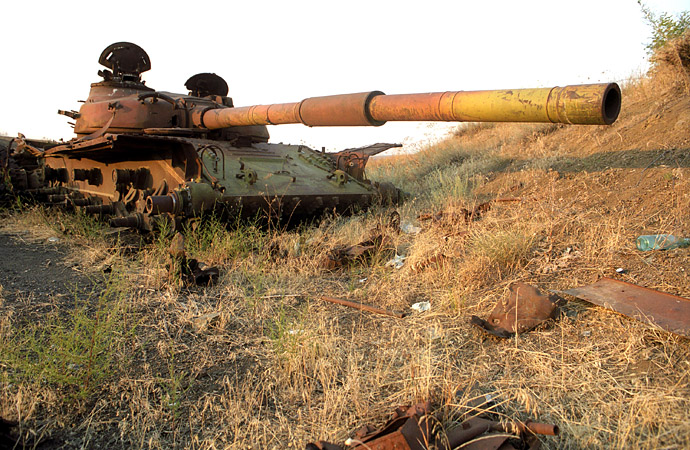
16.7 kilometers south of Lachin, Armenian-controlled Azerbaijan
© Onnik Krikorian for IWPR
Expectations of ending the long-running conflict between Armenia and Azerbaijan over the disputed territory of Nagorno Karabakh are high ahead of a meeting between the two presidents hosted by Russian President Dimitry Medvedev in Kazan on 25 June. The war fought in the early 1990s ended in a ceasefire agreement signed in May 1994. Over 25,000 died and a million forced to flee from their homes. Since then, according to The Economist, around 3,000 have died in cross-border skirmishes leading many analysts to argue that the conflict is anything but frozen. The International Crisis Group, for example, warned of the danger of an ‘accidental war’ earlier this year.
According to news reports and official statements, the hope is that Azerbaijani president, Ilham Aliyev, and his Armenian counterpart, Serge Sargsyan, will finalize and sign the basic principles that will form the basis for a final peace deal when they meet in Russia. Such hopes follow what many consider to be an unprecedented joint statement from the U.S., Russian and French presidents, representing the three countries tasked with mediating a peace deal under the auspices of the OSCE Minsk Group, at the G8 Summit in Deauville, France, last month.
We, the Presidents of the OSCE Minsk Group’s Co-Chair countries — France, the Russian Federation, and the United States of America — are convinced the time has arrived for all the sides to the Nagorno-Karabakh conflict to take a decisive step towards a peaceful settlement.
We reiterate that only a negotiated settlement can lead to peace, stability, and reconciliation, opening opportunities for regional development and cooperation. The use of force created the current situation of confrontation and instability. Its use again would only bring more suffering and devastation, and would be condemned by the international community. We strongly urge the leaders of the sides to prepare their populations for peace, not war.
[…]
We therefore call upon the Presidents of Armenia and Azerbaijan to demonstrate their political will by finalizing the Basic Principles during their upcoming summit in June. Further delay would only call into question the commitment of the sides to reach an agreement. Once an agreement has been reached, we stand ready to witness the formal acceptance of these Principles, to assist in the drafting of the peace agreement, and then to support its implementation with our international partners.
There are reportedly still some issues to resolve, but press reports indicate that the basic principles are not too dissimilar from the 1994 Bishkek Protocol signed just a few days before the ceasefire agreement came into effect. In particular, a peace deal would see the return of seven Armenian-controlled regions outside of Nagorno Karabakh proper as also demanded by UN Security Council Resolutions 822, 853, 874 and 884, an interim status for the disputed territory as well as the return of refugees and IDPs to their homes. What seems to have prevented an agreement to date, however, has been the timescale for such a peace plan and the mechanisms for determining Karabakh’s status.
In particular, Armenia would prefer to return the Azerbaijani regions of Lachin and Kelbajar only after final status has been determined while Azerbaijan wants them beforehand. Meanwhile, with Armenia demanding nothing less than full independence for Karabakh, Azerbaijan is more inclined towards considering a ‘high degree of autonomy’ within its territory in much the same way as Tatarstan functions inside the Russian Federation. Regardless, whatever its status, there is also the issue of how wide a strategic land corridor connecting Armenia and Karabakh through Lachin would be in addition to the makeup of peacekeeping forces and the nature of international security guarantees.
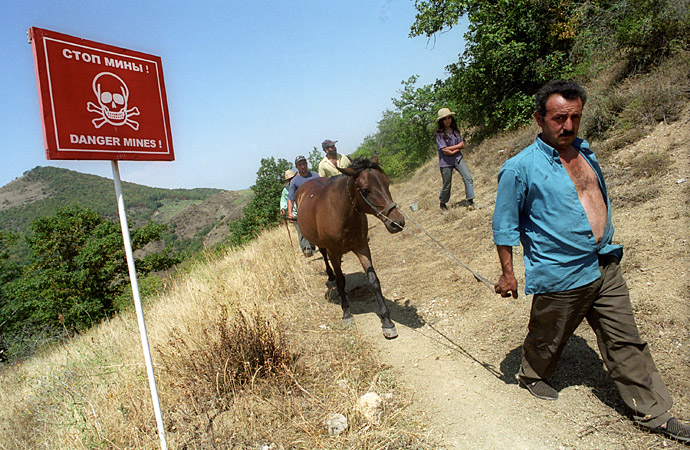
Suarassy, Armenian-controlled Azerbaijan © Onnik Krikorian for IWPR
Nationalists in both countries will undoubtedly oppose such a peace plan, with some Armenians objecting to the return of any Azerbaijani territory outside Karabakh and many Azeris unwilling to risk the chance that the basic principles could pave the way for full independence and the loss of key cultural sites such as Shusha, a formerly majority Azerbaijani town.
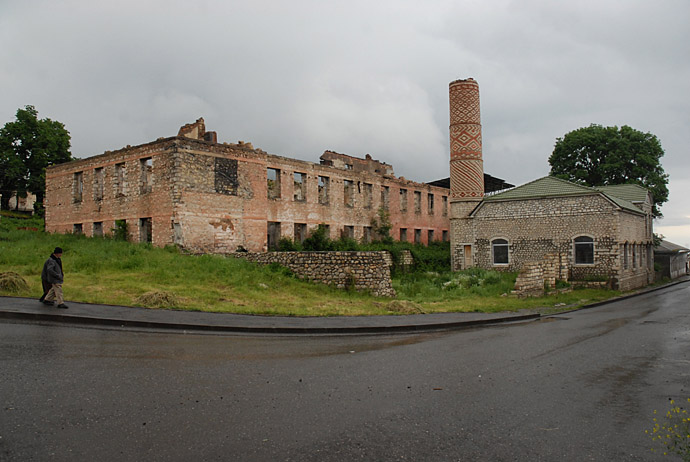
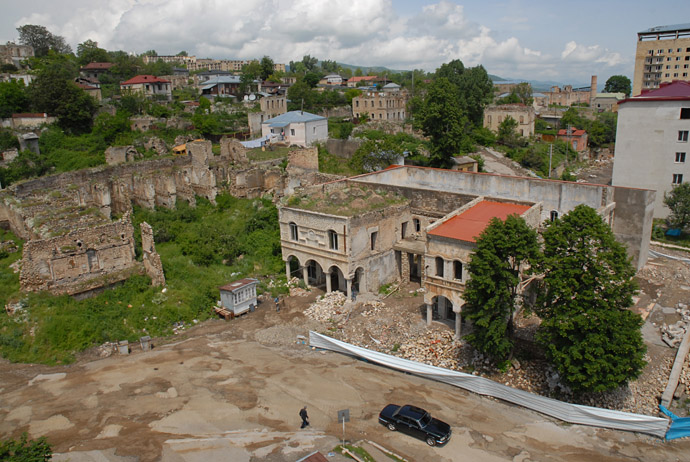
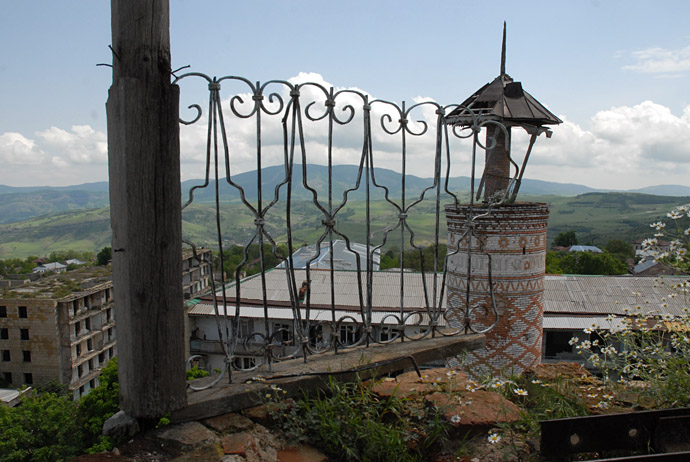
Shusha, Nagorno Karabakh © Onnik Krikorian for The National
Some analysts also remain skeptical, with Yerevan-based Richard Giragosian telling the New York Times that the expected initial outcome of the Kazan meeting was to merely sign a document renouncing the use of force to resolve the conflict. "The two sides are simply too far apart, and there’s no political will," he was quoted as saying. Similarly, some news reports quoting Azerbaijani officials as saying that they do not believe there will be a breakthrough at the Kazan talks.
Azerbaijan does not want to wage war over the Armenian-backed breakaway territory of Nagorno-Karabakh, yet it sees no chance of a breakthrough in talks later this month, its deputy foreign minister said.
[…]
Azimov said he was not optimistic for a breakthrough at the meeting of Aliyev and Armenian President Serzh Sarksyan in Kazan. Russian President Dmitry Medvedev will mediate.
"I do not have an optimistic view on what may happen in Kazan. I do not expect an agreement on basic principles in Kazan but I expect some more clarity on the most critical issues," Azimov said. He did not elaborate.
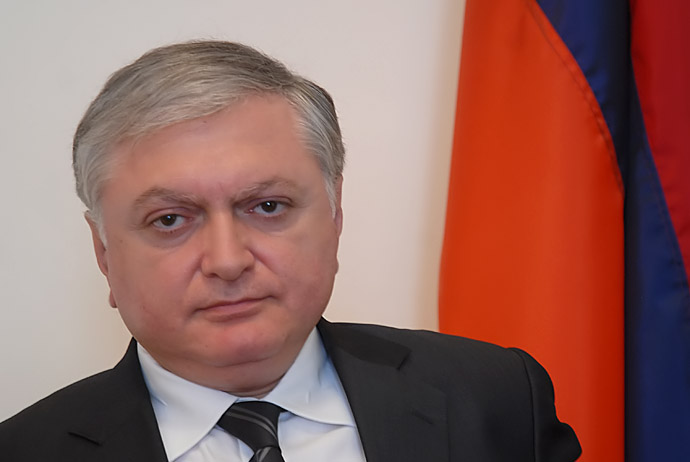
Foreign Minister Eduard Nalbandian, Yerevan, Republic of Armenia
© Onnik Krikorian for The Wall Street Journal
Even so, Armenian Foreign Ministry Spokesperson Tigran Balayan late last night tweeted that the sides were moving closer. Later, the same news was reported in the media.
Armenia and Azerbaijan reported significant progress towards the resolution of the Nagorno-Karabakh conflict following a meeting of their foreign ministers held in Moscow on Saturday.
The meeting was hosted and mediated by Russia’s Foreign Minister Sergei Lavrov in preparation for the upcoming Armenian-Azerbaijan summit which international mediators hope will result in a framework peace agreement on Karabakh.
The Armenian Foreign Ministry said Foreign Ministers Edward Nalbandian and Elmar Mammadyarov narrowed their governments’ differences on "a number of key issues of the basic principles of resolving the Nagorno-Karabakh conflict." "That draft document will be discussed at the trilateral summit to be held at the end of June," the ministry said in a statement.
For those following the Karabakh negotiations for the past 17 years, however, there seems no plausible reason not to agree and sign the basic principles later this month. Thomas de Waal, Senior Associate for Russia and Eurasia at the Carnegie Endowment and author of Black Garden: Armenia and Azerbaijan through Peace and War who recently made an impassioned plea for a third narrative of peace, puts it more bluntly.
[…] it comes down to political will. Are the Armenian and Azerbaijani leaders merely using the endlessly elusive Karabakh peace process as a device to keep the international community sweet and to demand loyalty from their populations, while never seriously wishing to sign a peace? Or are they genuinely committed to a peace agreement which would begin the long-term transformation of their region, but trapped by their own national discourse and political rhetoric and afraid to move forward? Or a bit of both?
This is why I welcome the line in the Deauville document which says, "Further delay would only call into question the commitment of the sides to reach an agreement." Or to put it another way, "We now have a workable document. Prove to us you are serious and sign it."
[…]
[…] as the Kazan meeting approaches, the stakes are raised for both peace and war in the Caucasus.
Onnik Krikorian is a British journalist and photojournalist based in Yerevan, Armenia, and has been visiting and covering the Nagorno Karabakh conflict since 1994. He has also fixed for TV reports on the Nagorno Karabakh conflict for Al Jazeera English and the BBC. He can be contacted via his personal project on Armenia-Azerbaijan relations here.
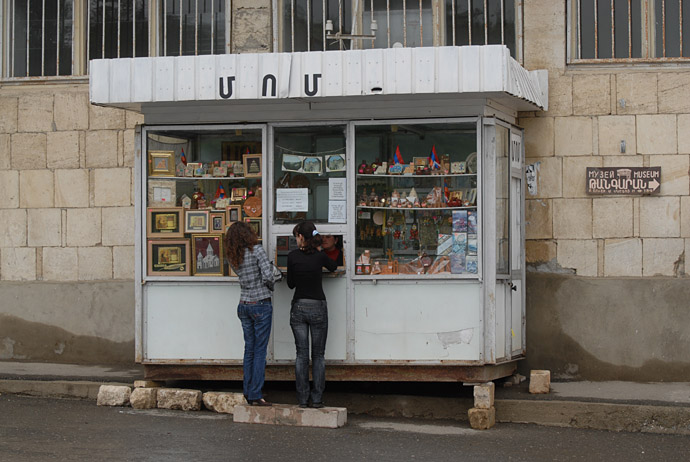
Shusha, Nagorno Karabakh © Onnik Krikorian for The National
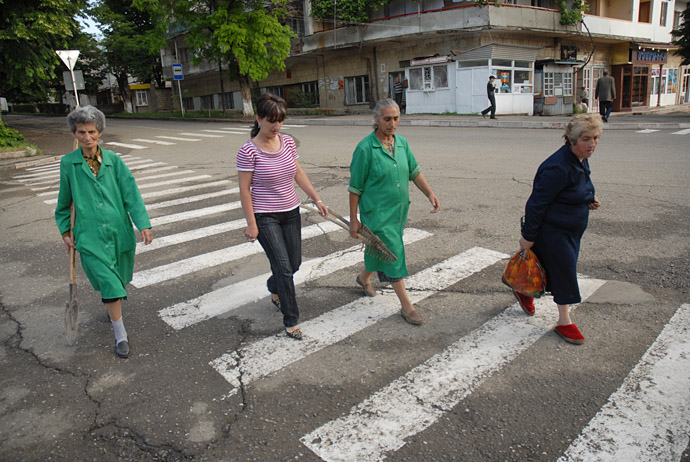
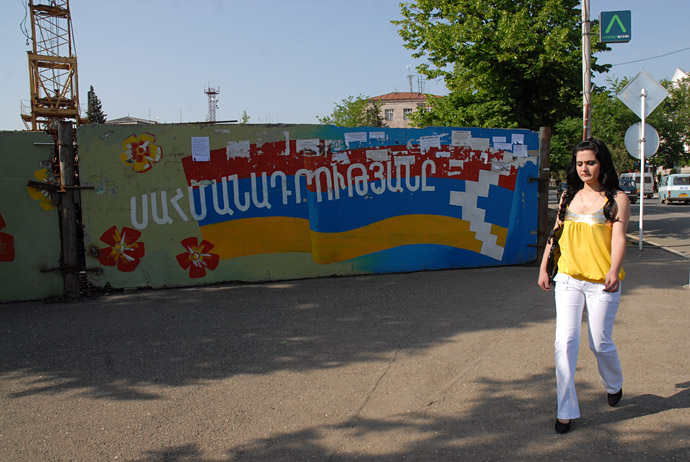
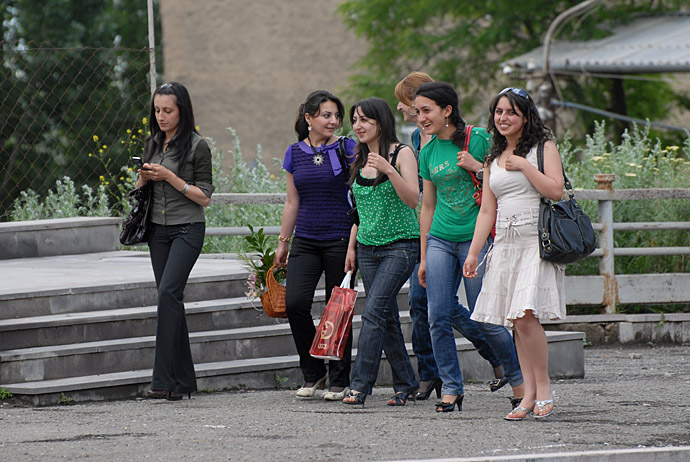
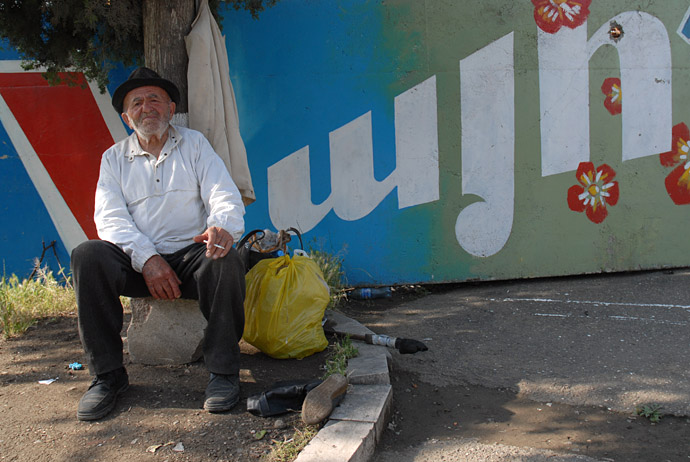
Stepanakert, Nagorno Karabakh © Onnik Krikorian for The National
]]>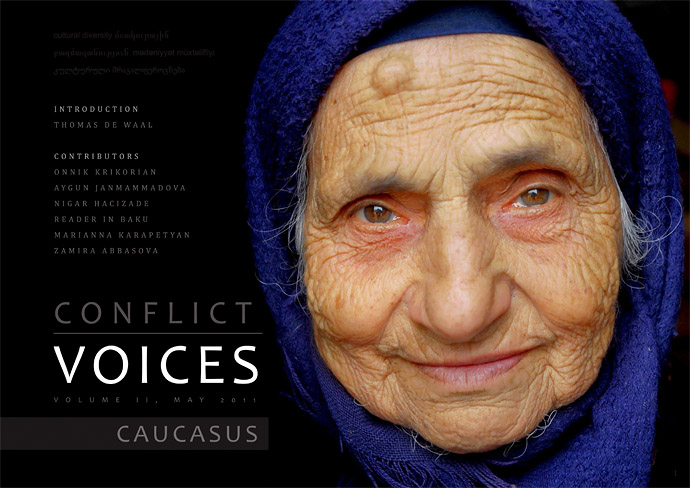
Caucasus Conflict Voices is a voluntary grassroots initiative to amplify alternative views on the conflict between Armenia and Azerbaijan over the disputed territory of Nagorno Karabakh. Today marks the 17th anniversary of the 1994 ceasefire, but both sides are as far away as ever from signing a permanent peace deal. Marking the anniversary, the second edition of Caucasus Conflict Voices is now available for browsing online or downloading.
It also features an introduction by Thomas de Waal, senior associate in the Russia and Eurasia Program at the Carnegie Endowment and author of Black Garden: Armenia and Azerbaijan through Peace and War, calling for a third narrative in the conflict — a narrative of peace.
Caucasus Conflict Voices — May 2011
Introduction by Thomas de Waal
Anyone who works with the conflicts of the Caucasus learns to live with contradiction. If you watch state media in Armenia or Azerbaijan or hear some politicians speak, you could believe that these two nations are implacable enemies on the verge of war. One Azerbaijani friend told me that nowadays whenever he hears the word "fascist" he expects to hear the word "Armenian" attached to it. In many ways the modern identities of independent Armenia and Azerbaijan and of the small statelet of Nagorny Karabakh are defined by rejection and hatred of the other.
Yet as soon as you probe deeper strange things start to happen and this picture begins to blur. A long conversation with an Azerbaijani about how terrible the Armenians are ends with the admission that his grandmother was actually…Armenian. A Karabakh Armenian talks about the crimes of the Azerbaijanis and then casually lets slip that he had Azeri friends at school and still remembers a lot of the language.
Move outside the conflict zone and these hidden signs of compatibility come out into the open. In the territory of Georgia, Armenian and Azeri villagers live side by side. There is trade and even inter-marriage. Armenians and Azerbaijanis often prefer to do business with each other than with Georgians.
We hear far too little of what I call this "third narrative" of the Armenian-Azerbaijani conflict, a narrative of peace. It spins the idea that the two peoples are capable of getting along fine, have lived together in the past and, if politicians are able to overcome differences on the Karabakh conflict, can live together in the future. International mediators are too timid to speak this narrative or feel that it is not their business. The media in both countries suppresses it.
This is why I congratulate Onnik Krikorian for the work he has done over the past few years, both in print and in images, and which is published here. He has given a voice to these alternative points of view and given a vivid picture of the different and much more positive Armenian-Azerbaijani reality that still exists in ordinary people and in Georgia.
Look at these pictures and descriptions of villages such as Tekali and you see that the problem there is not ethnic incompatibility or historical injustice, but poverty — poverty that will have a much better chance of being fixed if the Karabakh conflict can be overcome and money can be diverted from buying expensive weapons. It is a totally different and refreshing approach and he has done it pretty much by himself.
Send this collection to anyone who thinks they understand the Armenian-Azerbaijani conflict and be pleasantly surprised by their reaction.
Thomas de Waal is a senior associate in the Russia and Eurasia Program at the Carnegie Endowment. he is also the author of Black Garden: Armenia and Azerbaijan through Peace and War. link
Articles, opinions and photos are available on the latest edition of Caucasus Conflict Voices here or for browsing below.
16.7 kilometers south of Lachin, Armenian-controlled Azerbaijan. Photo © Onnik Krikorian
While it didn’t come as much of a surprise, the latest report from the International Crisis Group (ICG) makes depressing reading. Locked in a bitter stalemate since the war over the disputed territory of Nagorno Karabakh during which around 25,000 were killed and a million forced to flee their homes, a final peace deal remains as elusive as ever. More alarmingly, perhaps, last year was one of the worst in recent history with skirmishes on the front line claiming dozens of lives. Moreover, if talk since the 1994 ceasefire agreement, which effectively put the conflict on hold, had been of conflict resolution, 2011 looks to be more defined by increasing talk of the need for conflict prevention.
An arms race, escalating front-line clashes, vitriolic war rhetoric and a virtual breakdown in peace talks are increasing the chance Armenia and Azerbaijan will go back to war over Nagorno-Karabakh. Preventing this is urgent. Increased military capabilities on both sides would make a new armed conflict in the South Caucasus far more deadly than the 1992-1994 one that ended with a shaky truce. Neither side would be likely to win easily or quickly. Regional alliances could pull in Russia, Turkey and Iran. Vital oil and gas pipelines near the front lines would be threatened, as would the cooperation between Russia and Turkey that is central to regional stability. Another refugee crisis would be likely. To start reversing this dangerous downward trend, the opposing sides should sign a document on basic principles for resolving the conflict peacefully and undertake confidence-building steps to reduce tensions and avert a resumption of fighting.
There has been significant deterioration over the past year. Neither government is planning an all-out offensive in the near term, but skirmishes that already kill 30 people a year could easily spiral out of control. It is unclear if the leaders in Yerevan and Baku thoroughly calculate the potential consequences of a new round of tit-for-tat attacks. Ambiguity and lack of transparency about operations along the line of contact, arms deals and other military expenditures and even the state of the peace talks all contribute to a precarious situation. Monitoring mechanisms should be strengthened and confidence-building steps implemented to decrease the chance of an accidental war.
At the same time, more has to be done to change a status quo that is deeply damaging to Azerbaijan; 586,000 Azeris are internally displaced (IDPs) from Nagorno-Karabakh and adjacent areas, and some 16 per cent of the country’s territory is occupied. Otherwise, Azerbaijan public opinion and leadership will feel justified to use the military assets Baku has been accumulating at an increased rate: the already substantial defence budget is slated to rise by some 45 per cent between 2010 and 2011, to $3.1 billion out of a total $15.9 billion state budget.
The report, available for download in PDF format here, includes some sensible recommendations such as the need to endorse the basic principles which would form the basis for a later peace agreement, the implementation of confidence building measures such as the withdrawal of snipers from the front line, compliance with arms limitations treaties and agreements, but particularly a change in policy which only aggravates the situation. Unfortunately, though, the task will not be simple, especially in an environment where most Armenians and Azerbaijanis are unwilling or unable to communicate with each other.
A recent household survey by the Caucasus Resource Research Centers (CRRC), for example, revealed that 70 percent of Armenians were against friendship with Azerbaijanis, while 97 percent of Azerbaijanis were against friendship with Armenians. Meanwhile, town hall meetings in Armenia, Azerbaijan and Nagorno Karabakh showed that over 50 percent of Armenians prefer the current situation of ‘no war, no peace’ rather than compromise and release territories surrounding Karabakh currently under Armenian control for a referendum to determine the territory’s status. Only 0.3 percent of Azerbaijanis support such an option.
Suarassy, Armenian-controlled Azerbaijan. Photo © Onnik Krikorian
The media in both countries plays a less than constructive role by perpetuating negative stereotypes of the enemy too, and the outlook in general looks bleak. Indeed, some analysts and regional experts preempted the ICG report by wondering if a new war in the near future was now inevitable. Nevertheless, there are some alternative voices starting to emerge although they remain a tiny minority in both countries. It might even be appropriate to call them insignificant, but as they were never heard before, and their existence in an environment hardly conducive to any talk of peace somewhat unprecedented, that’s probably unfair.
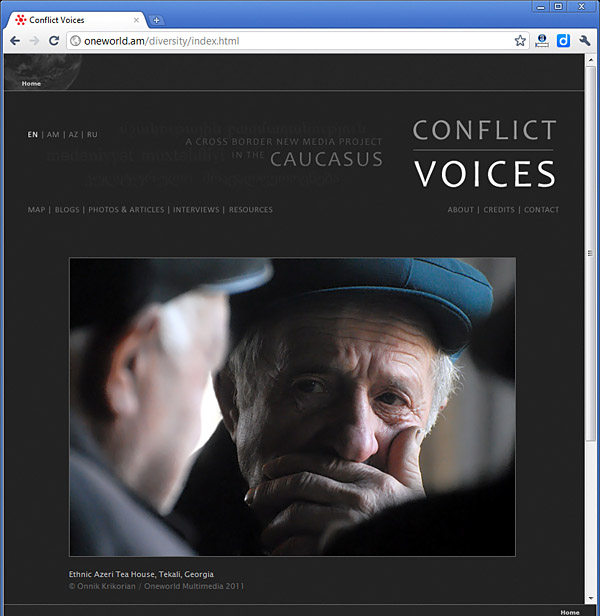
In fact, they’re very significant indeed simply because they exist at all, although there is an urgent need to increase their numbers and make alternative views on the conflict more widely available. Although this should be through the mass media, that is next to impossible for now, although social media offers an albeit limited alternative. This is what my personal project, Conflict Voices, and special coverage on Global Voices is trying to achieve. Recently, for example, Marianna Karapetyan, an Armenian now living in Russia, wrote about her close friendship with an Azerbaijani. Such views and realities are rarely if ever heard in the local Armenian and Azerbaijani media.
[…] we made an agreement promising never to discuss the situation between our countries because we knew that, as we’d been told different things, the discussion would never be constructive and only just harm our friendship. This was perfectly convenient for me because, unlike Leyla, I knew next to nothing and I wouldn’t really be able to argue. But realizing this, I was always amazed that she came to meet me first, despite all that true or false information she had been told about Armenia back home. Over time, I started researching the conflict and asking around to fill in the gaps of my knowledge and to understand what had happened. But, as I was learning and discovering more, I never felt my feelings towards Leyla changing. Instead, we became even closer as friends.
Not only that, but I also learned that during the incidents in Baku, her family helped many Armenians in different ways. They traded their apartment in Moscow for one owned
by Armenians in Baku, and even though the Moscow one was way more valuable, so that they could move. Her grandma’s passport was also used to transfer around 50 Armenian women across the border and her neighbor continues to help people sneak through customs in Georgia to see their abandoned homes. In fact, there are many more such stories which I would never have allowed myself to believe before.
And yesterday, in a powerful and spontaneous post for the project, Nigar Hacizade, an Azerbaijani now living in Turkey, made an impassioned plea for peace.
I don’t want to be from a country that is permanently occupied, that is permanently grieving, that has miserable refugees with forever ruined lives. Neither do I want to be from a country that is constantly considering aggression. I don’t want to be from a country where the news accumulates around the enemy, what the enemy does, what the enemy says. I don’t want to be from a country where the word describing the people living next door carries a negative meaning no matter what the topic is. I would like Azerbaijan to free itself from its post-war identification based on Armenia as the enemy.
[…]
I have no concrete answers, certainly not for this piece, but I will end with one thought. I know Armenians think about these questions just like we think about them. They think about peace, justice, their lands, and their legitimate grievances. Believe it or not, they think that they are in the right; isn’t that crazy? Well, it’s not. Neither are we crazy. It’s such a basic idea, yet such a hard nut to crack. But I believe it’s the key to get out of this windowless cell we have locked ourselves in.
I know there are Armenians who want the things that I want, and I know that we have no other choice but to find ourselves a middle ground. We don’t have to meet each other exactly in the middle; we just have to start walking towards each other. We have to do it for ourselves, for our legacy, for our collective dignity.
More of these alternative opinions can be read on the project site and also in the form of a free e-book in English and Russian for viewing online or download.
However, even so, with talk more and more of war, the situation does not look good. In Armenia, for example, some analysts expect nationalist rhetoric against a compromise peace deal to increase in the year leading up to the 2012 parliamentary elections while a new law under consideration in Azerbaijan would effectively make unauthorized cross-border cooperation with Armenian organizations and even media outlets a criminal offense. Indeed, in such an environment, perhaps the question is not if there will be a new war between Armenia and Azerbaijan over Nagorno Karabakh, but unfortunately more one of when.
]]>