Hosted in partnership with Bertha Doc House this one-off screening will be followed by a Panel Discussion. Speakers include historian and founding director of the Gomidas Institute Ara Sarafian; Prof. Marc Baer, author and historian of the Ottoman Empire at LSE; and Dr Carla Garapedian (consulting producer, Intent to Destroy; associate producer The Promise).
Book tickets here: http://dochouse.org/cinema/screenings/intent-destroy-qa
The screening will take place at the Curzon Bloomsbury cinema.


When people think of diaspora populations, their first thought tends to be of refugee populations, the migrant crisis, and communities fleeing conflict as a result of what’s reported in the media. However, this is only part of the story. Often these scattered populations across the globe continue to have an enormous impact on their homelands.
The European Research Council has sponsored 5 years of extensive research and close to 500 first-hand interviews among Kosovo, Albanian, Armenian, Bosnian, Kurdish, Iraqi and Palestinian diasporas, and a large-scale survey. These displaced, real, diverse people, living in European countries from the UK, Germany, Sweden, the Netherlands and France give us a unique insight into the homelands from which they originate.
This resourceful, entrepreneurial section of the population are important actors in the conflicts and post-conflict reconstruction processes of their homelands, be that Iraq, Palestine, Bosnia or Armenia.
Conflict-generated diasporas can have a huge influence on war and peace, and it is often something that is under reported in the media.
Dr. Maria Koinova, Principal Investigator for the ERC Project implemented at Warwick University, and her team will present their paper “Diasporas and Contested Sovereignty”, and be joined by journalists to discuss the wider importance of their work and how it can influence public policy today.
For more information on the project, visit their website here.
Chair
Chris Morris – BBC Correspondent

Morris regularly contributes to BBC News, Today and From Our Own Correspondent, and is the author of the 2005 Granta publication The New Turkey. He was BBC Turkey Correspondent from 1997-2001 based first in Ankara and later opening the BBC’s new bureau in Istanbul covering the 1999 İzmit earthquake and the arrest and trial of the Kurdish rebel leader Abdullah Ocalan. From 2001-2005 Morris was the BBC Europe Correspondent based in Brussels covering the European Union, the proposed European constitution, and other European stories.
Speakers
Dr Maria Koinova – Principal Investigator of the ERC Starting Grant “Diasporas and Contested Sovereignty”

Before joining Warwick University in 2012, Dr. Maria Koinova held research fellowships and visiting scholar positions at Harvard, Cornell, Dartmouth, the Woodrow Wilson International Center for Scholars in Washington D.C., the European University Institute, and Uppsala University, among other academic institutions. Koinova is the author of Ethnonationalist Conflict in Postcommunist States. Since 2006 Koinova has worked on topics related to diasporas, conflicts, post-conflict reconstruction and democratization, and has conducted multi-sited fieldwork among the Albanian, Armenian, Bosnian, Croatian, Lebanese, Palestinian, Serbian, and Ukrainian diasporas in the US and/or in Europe.
Tony Barber – Financial Times Europe News Editor

Tony is a columnist and specialist writer on European political, economic and business news and currently the Europe editor for the Financial Times. From 1990 – 1997 he was the East Europe Editor and Europe Editor at the Independent. Before that, he worked as a Reuters Foreign Correspondent from a range of cities from New York, Vienna, Moscow, Warsaw to Belgrade.
Dr Ben Margulies – post-doctoral Research Fellow, University of Warwick

Ben’s research background is primarily in comparative and European politics. He is also interested in the way that nations and party systems respond to migration and globalisation. His Ph.D. “Liberal Parties and Party Systems” used data taken from European party manifestos to track when parties moved left or right, and showed how these movements affected vote shares that liberal parties received. Ben joined this project to help develop a large-scale survey among conflict-generated diasporas in Europe.
Dr Dženta Karabegović – Ph.D. University of Warwick

Dženeta’s Ph.D. research project analyses diaspora influence on a weak state in post-conflict environments. Her work has looked into Bosnian diaspora mobilisation in Europe around issues of transitional justice, genocide remembrance, and political participation. This research was undertaken in the form of interviews, participant observation and process tracing with multi-sited fieldwork. Dženeta holds an MA. from the University of Chicago and was a visiting scholar from the Harriman Institute at Columbia University.
Dr Oula Kadhum – Ph.D. University of Warwick

Oula Kadhum’s research investigates in a comparative perspective diaspora mobilisation for state-building following the 2003 intervention in Iraq. Her work explores how the diaspora in the UK and Sweden mobilised towards this end and why there were differences in their approaches to building the state. Oula completed her Masters degree at the School of African and Oriental Studies, University of London, a postgraduate certificate in Education at Kings College London, and a Bachelors degree from Queen Mary University of London.
Featured image: protestors demonstrating against Turkish President Erdogan’s visit to Strasbourg. France Oct 4th, 2015
]]>The future of water isn’t a simple topic – it is vast and can often be overwhelming. During the discussion we will explore how this topic can be made accessible through the power of storytelling and film.
We will premiere four short documentaries which were produced as part of the global sH2Orts film competition, organised by WaterAid in partnership with the Public Media Alliance’s WorldView project. Each film offers a unique insight into the global water crisis and urges us to think about how we can respond to it.
The discussion which follows will focus on climate change, innovation, urbanisation and inequality – and how they relate to the global water crisis.
Panelists
Mark Galloway, Director of International Broadcasting Trust (Moderator)
Before joining IBT, Mark worked as a journalist, current affairs producer and documentary filmmaker. He’s been a Channel 4 Commissioning Editor, responsible for Education and Features, and has made films for ITV, Channel 4, the BBC, Discovery and Al Jazeera, winning more than a dozen national and international awards including a Gold Medal at the New York Film Festival, a Peabody Award and a BAFTA. At IBT, Mark is responsible for the day to day running of the organization, overall strategy, research and relations with IBT’s members.
Alok Jha is a journalist, broadcaster and author of The Water Book. He is the science correspondent at ITV News. Before that, he spent a decade at the Guardian and made programmes for the BBC.
Bethlehem Mengistu has over 12 years experience in the development sector, with special focus on gender equality, human rights, good governance and provision of basic services. She has worked within senior roles for organizations such as WaterAid, Care International, Action Aid and notable grassroots women’s organizations in East Africa. Bethlehem has solid experience in programme management, strategic campaigning and advocacy and policy analysis. Her educational background is in Law and Sociology and is currently working at WaterAid as Regional Advocacy Manager for East Africa and Acting Country Representative for WaterAid in Ethiopia.
Menka Sanghvi is an innovation researcher and facilitator focusing on global health and wellbeing. At the Humanitarian Innovation Fund she leads a dedicated fund to improve water, sanitation and hygiene conditions for vulnerable communities. In her role she supports a wide range of project teams in building ideas, testing them out, and scaling to achieve better impact. Menka brings over a decade of experience in delivering innovation projects with organisations such as Oxfam, Unilever, Barclays Bank, Impact Hub, and with local communities. She serves as a mentor for the Global Sustainability Jam, and a judge for the UNDP Equator Prize.
Sarah Mosses is CEO of Together Films, a new consultancy working with social issue film content to reach new audiences. She helps filmmakers craft Impact Distribution Campaigns to increase both their social impact, audience reach and revenue potential. As an award winning Producer, Sarah’s debut feature documentary They Will Have To Kill Us First had its World Premiere at SXSW 2015 and European Premiere at London Film Festival 2015. Sarah is a mentor for Documentary Campus, Eso Doc, Sheffield DocFest, On Screen Manitoba, working with emerging producers to enhance their film narrative and distribution/marketing potential.
Film lineup:
PLACE OF SWEET WATERS
Directed by: Sven Harding
2015/South Africa
www.svenharding.com
Place of Sweet Waters will take us to the underground tunnels which run beneath the city of Cape Town, transporting millions of litres of water from Table Mountain directly into the sea. As South Africa grapples with its worst drought in more than 30 years, the film raises questions about why this urban water source is being ‘wasted’.

BLANKETED SNOWS
Directed by: Vardan Hovhannisyan
2015/Armenia
caucadoconline.com/projects/author/25
Filmed in a stunning mountain region of Armenia, Blanketed Snows will encourage the panel to think about how climate change affects water supplies and livelihoods, and how the two are inextricably linked.

AUTOMATIC TUBIG MACHINE
Directed by: Giselle Santos
2015/Philippines
twitter.com/sampunglitro
Automatic Tubig Machine is a fly-on-the-wall documentary about remote communities in the Philippines who are using an innovative water supply technology. During this observational film we are offered a unique and fascinating insight into how children and adults gain access to this vital resource.

THE HOIST
Directed by: Ibrahim S Kamara
2015/Sierra Leone
http://www.wateraid.org/film-competition/sh2orts2016/winners
Set in Sierra Leone, The Hoist looks at the ingenuity of a local young woman who wants to simplify the time-consuming and physical task of collecting water. The film raises questions about the role new technology and innovation can play in the face of the global water crisis.

‘[Photography] isn’t necessarily about creating images; it’s about experiencing life and experiencing stories. Images are just a side effect.’
On Tuesday 27 October, American-Armenian photographer Diana Markosian joined an audience at the Frontline Club to discuss her work with Fiona Rogers, the founder of Firecracker – a platform for the promotion of European women photographers – and the global business manager at Magnum Photos International. 1915 is Markosian’s latest project, for which she travelled to Armenia to meet the last living survivors of the Armenian genocide that took place at the beginning of the 20th Century.

Fiona Rogers and Diana Markosian at the Frontline Club
1915 was preceded by a series called ‘Inventing my Father’ (2013-14). Markosian was taken to the United States by her mother when she was seven. “For fifteen years I didn’t know anything about my father. A few years ago I decided to travel back to Armenia to find him… And all these years later I found my father, standing just how I left him: in the doorway, neither fully in or out of my life.”
“Through photography, we found a way to connect and to create new memories… My father opened this distant past for me.”
At the same time, reconnecting to her father proved difficult: “So much of it hurt and there is no guidebook in finding a father.”
In the same period, Markosian was asked to make a series of photographs of survivors of the Armenian genocide. One of her aims “was to reconnect Turkey and Armenia, because there’s so much tension between the two countries and as a photographer you want to move the conversation forward.”
Markosian found three individuals who remembered the genocide. “I asked them about their last memories in Turkey. I went to Turkey, photographed that memory and brought it back to them a century later.”
Yepraksia, now aged 110 years old, remembered crossing a river with her family that was coloured “red, full of blood. I went back and photographed that river,” said Markosian.
Another survivor of the Armenian genocide, Movses, remembered the church in his village and asked Markosian to place his image on the stones of the church, which is now a ruin.
She said: “When I was travelling to his village and exploring it I found everything that he had described to me: the oranges that he remembered eating, the sheep and the sea.”
Markosian continued: “Upon seeing this image, Movses’ reaction was indescribable. He began to dance and sing. His whole goal was to hold this board as close as he could as a way of going back in time.”
Markosian gave her photographs to the families, who all placed them in their bedrooms.
“Movses said: ’Now I get to wake up in my village’.”

Movses looking at his village
Mariam was just a baby when the genocide started. “She was taken in by a Kurdish family… Mariam asked me to bring back dirt for her, so she could be buried in Turkish soil.”
While working on the project, Markosian often felt she lacked the authority to do a story about the Armenian genocide. “Being Armenian is not enough,” she said.
But while interviewing the survivors, she understood that “this wasn’t so much about the genocide as much as the memory that they held. Because they were children when they escaped… it started resonating with me and my past, of being removed from my country.” Markosian’s own loss made it possible for her to relate to the three survivors.
“It was really difficult for me to identify myself as being Armenian” said Markosian. “These three individuals opened something inside of me and they allowed me to connect with this culture and this history.”
.@dianamarkosian & I will be discussing her Armenian project @frontlineclub tonight. https://t.co/OS9KGkNBLm pic.twitter.com/NS23C32DXP
— Fiona Rogers (@Fiona_Rogers) October 27, 2015
Rogers asked Markosian how she managed to handle the enormity of the subject.
“These individuals… guided me back to their past,” Markosian replied. “They are the ones who built this narrative.”
She continued: “This idea of collaborating with your subjects really appeals to me in my work now, because I think it strengthens the work and it makes the work more honest.”
A century after the genocide, the poignancy and topicality of the event was proven by passionate and emotional remarks from members of the audience.
]]>
Holding a cane in his right hand, Movses Haneshyan, 105, slowly approaches a life-size landscape.
He pauses, looks at the image, and begins to sing: “My home… My Armenia.”
It’s the first time Movses is seeing his home in 98 years.
A century ago, on the eve of World War I, there were two million Armenians living in the Ottoman Empire. By the early 1920s, when the massacres and deportations finally ended, one and a half million of them were dead, with many more forcibly removed from the country.
The picture Movses is looking at is taken by Armenian-American photographer Diana Markosian. She travelled to Armenia to meet Movses and other survivors, to ask them about their last memories of their early home. She then retraced their steps in Turkey to retrieve a piece of their lost homeland.
She will be joining us in conversation with Fiona Rogers, global business development manager at Magnum Photos International & founder of Firecracker, to show her work and share the stories of the survivors she met who, 100 years on, still remember their home.
Diana Markosian is an Armenian-American photographer whose work explores the relationship between memory and place. She received her master’s degree from Columbia University’s Graduate School of Journalism at 20. Her work has since taken her to some of the most remote corners of the world, where she has worked on both personal and editorial work. Her images can be found in publications including The New York Times, The New Yorker and Time Magazine. Her work is represented by Reportage by Getty Images.
]]>
Monday 11 March
On Monday, a two-day referendum on the political status of the Falklands Islands wraps-up, with the results due that evening. The referendum is largely symbolic, since the islanders overwhelmingly favour retaining their status as an Overseas Territory of the United Kingdom. The Argentine government, predictably, has already said it considers the poll a farce and it that it will continue to pursue its claim to sovereignty regardless of the outcome. Expect some chest-beating in Buenos Aires.

Also Monday, the US and South Korea are scheduled to begin an annual joint military exercise called Key Resolve. The exercise, which runs until 21 March and involves about 13,500 troops from the two nations, comes at a particularly tense time in the peninsula following the 12 February nuclear test in North Korea and the subsequent tightening of UN sanctions against the secretive communist state, which were approved on 7 March.
Monday is also a big day at the UN Human Rights Council session taking place in Geneva. Reports on North Korea, Syria, Myanmar (Burma) and Iran are all due to be considered on Monday. There is a press conference with the Commission of Inquiry on Syria scheduled. It follows the announcement last week that the number of refugees from the conflict has surpassed the million-person mark.
EU Foreign Ministers are also due to meet Monday, with Syria a particular focus. Joint UN-Arab League Special Envoy for Syria Lakhdar Brahimi will brief ministers at a lunch before the meeting.

Tuesday 12 March

Russian President Vladimir Putin, meanwhile, will host the leader of the breakaway Georgian region of Abkhazia for talks in Moscow. He is also due to meet today with the Armenian President Serzh Sargsyan who is making his first visit abroad since securing re-election last month. This choice of location for the trip is a clear affirmation of the close – and geo-politically significant – ties between Yerevan and Moscow.
Finally Tuesday, IMF Managing Director Christine Lagarde is scheduled to arrive in Algeria where she will pay a three-day visit.
Wednesday 13 March
On Wednesday, British Foreign and Defence Secretaries William Hague and Philip Hammond will be hosting their Russian counterparts Sergey Lavrov and Sergei Shoigu for talks in London, the first talks in this ‘2+2’ format. Syria is likely to be high on the agenda, although cynics might suggest the UK has little influence over Russia in this, or any, regard. Another topic that may be discussed privately is the ongoing inquest into the murder of Alexander Litvinenko (a procedural hearing in that inquest takes place on Thursday).

Finally, in the United States the Senate Armed Services Committee is scheduled to hold what is expected to be a highly emotive hearing on sexual assault in the military, with three of the witnesses giving testimony at the hearing being victims of abuse themselves.
Thursday 14 March
EU leaders will descend upon Brussels again on Thursday for their second meeting of the year, and the first since the Italian elections that failed to produce a clear victor and threaten to derail what was looking like a significantly more positive year for the region. It will also be UK Prime Minister David Cameron’s first opportunity to meet with counterparts since his Chancellor George Osborne failed to extract any significant concessions on the proposed cap on bankers’ bonuses that is scheduled to take effect in 2014.

Finally, Russian President Vladimir Putin will hold talks with the Palestinian leader Mahmoud Abbas in Moscow. Russia currently holds the rotating presidency of the UN Security Council and has said it wants to make progress in the Middle East Peace Process a priority of its presidency.
Friday 15 March
The Italian parliament is scheduled to reconvene on Friday following the elections held at the end of February. Discussions on possible coalitions will begin in earnest the following week – likely on 21 March – hosted by outgoing Italian President Giorgio Napolitano. Many fear further elections later in the year are inevitable.
Friday also marks two years since the start of the Syrian uprising which has since descended into a horrific bloodbath which the international community appears powerless to stop.
Weekend

Saturday also marks the deadline for Israeli Prime Minister Benjamin Netanyahu to form a coalition, after he was forced to seek a two-week extension on March 2. Although both Israeli and US officials have issued public declarations suggesting a failure to form a government would not imperil the visit the following week by Barack Obama, others are not so sure.
Finally, as noted earlier, the 12th National People’s Congress closes in Beijing, with votes on draft resolutions and a closing ceremony, marking the culmination of the once –in-a-decade leadership transition in China.
Some images courtesy of Vasily Smirnov / Shutterstock.com
]]>Monday 18 February

In Moscow, the posthumous trial of whistleblowing lawyer Sergey Magnitsky on tax evasion charges is scheduled to resume. Magnitsky died aged 37 in prison in November 2009 as he awaited trial. Critics suggest the charges were trumped up in retaliation for Magnitsky’s role in exposing an alleged $230m fraud that was linked to a Russian Interior Ministry official.
In Brussels, there is a debate on the EU’s long-term budget which will be attended by EU Council President Herman van Rompuy and European Commission President Jose Manuel Barroso.
In Turkey, the trial of pianist Fazil Say for insulting Islam on Twitter is scheduled to resume, having been adjourned last October when a request to have the case dismissed was rejected.
Finally, Armenians will head to the polls on Monday for presidential elections, with incumbent Serzh Sargysyan hoping to secure a second five-year term.
Tuesday 19 February

Russian Foreign Minister Sergey Lavrov, meanwhile, is scheduled to travel to Brussels for talks with EU High Representative Catherine Ashton. Although Syria is likely to come up in the talks, it seems highly unlikely that the meeting will produce any fundamental breakthrough in terms of reconciling the divergent positions of Moscow and Brussels vis-a-vis the conflict.
Finally, parliamentary elections are scheduled to take place in Grenada.
Wednesday 20 February
China’s Foreign Minister Yang Jiechi is scheduled to begin a three-day visit to Russia on Wednesday. Although there have been telephone talks between Moscow and Beijing since North Korea conducted its third nuclear test last Tuesday, the visit will provide the first opportunity for face-to-face talks between Yang and his Russian counterpart Lavrov on Pyongyang’s latest provocation to the international community.
Finally, in New York, Japanese electronics giant Sony is due to hold mysterious media event, which many speculate will be used to launch the PlayStation 4.
Thursday 21 February

In Brussels, NATO defence ministers will converge for a two-day meeting. It follows the announcement made in President Obama’s State of the Union address that a further 34,000 US troops would be home from Afghanistan by next February ahead of the scheduled end of NATO combat operations next December. The meeting may also provide an opportunity for informal discussions on Syria.
Finally, a highly-anticipated meeting of shareholders of the mining group Bumi is scheduled to take place on Thursday. The meeting was called by financier Nat Rothschild, who has been locked in a dispute with Indonesia’s powerful Bakrie family, with whom he co-founded the company. Rothschild was ousted from the board, but retains a significant stake in the group and is seeking to oust 12 of Bumi’s 14 board members.
Friday 22 February

In the US, an Irish nanny charged over the death of a baby in her care is scheduled to make a court appearance. Aisling McCarthy Brady is charged with the assault and battery of one-year-old Rehma Sabir, who died last month. Some have compared the case to that of Louise Woodward.
Finally, parliamentary elections are scheduled to take place in the tiny east African nation Djibouti.
The weekend
The son-in-law of the Spanish king, Iñaki Urdangarin, has been ordered to appear before a magistrate in Mallorca on Saturday in connection to accusations of fraud and corruption at the Noos Institute, a charitable institution which he ran. Although he has not been formally charged, the connection of a royal to a case is the last thing the Spanish monarchy needs at the moment, given the dire economic situation many Spaniards are finding themselves in at the moment.
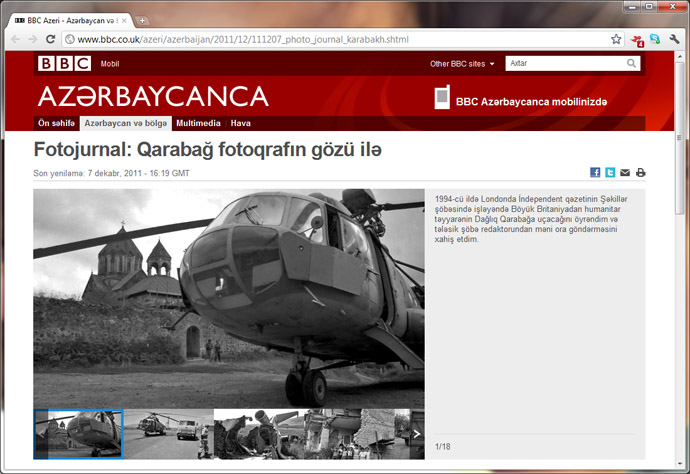
The BBC’s Azerbaijani Service has published a gallery of my photographs taken in the disputed territory of Nagorno Karabakh in 1994. Over 25,000 people were killed in the war waged in the early 1990s and a million forced to flee their homes. Since a ceasefire agreement was signed in 1994 attempts to mediate a peace deal through the OSCE Minsk Group have faltered and The Economist recently put the number of deaths on the front line since then at 3,000. Below is the English text from which the captions were taken and translated into Azerbaijani:
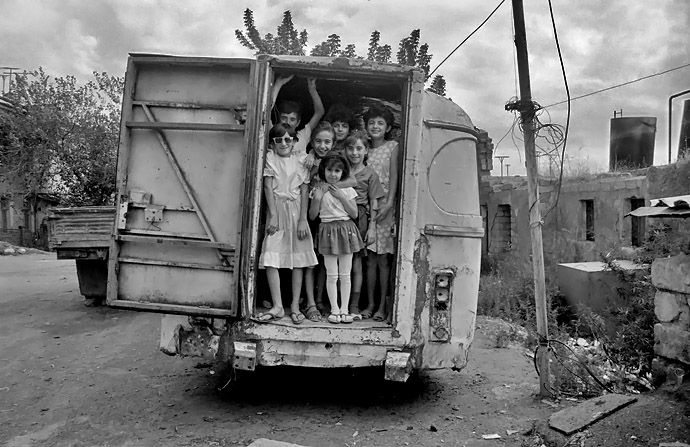
Nagorno Karabakh © Onnik Krikorian 1994
The Black Garden Revisited
When news of a humanitarian flight leaving the UK for Nagorno Karabakh reached me while working on the Picture Desk of The Independent in London in 1994, I jumped at the chance to request that the newspaper’s Picture Editor send me with it. He agreed, and in August I made my first ever trip to Armenia and the South Caucasus. The ceasefire between Armenia and Azerbaijan had been signed just months earlier and some analysts and international observers were warning that a new offensive might start within days or weeks, breaking the fragile armistice.
It didn’t, but the journey from Armenia to Karabakh was still perilous at times with the military helicopter carrying journalists and aid workers seemingly destined to smash into the side of a mountain at one point when it had no choice but to hug the terrain after a radio message warned of Azerbaijani jets in the vicinity. Yet, it wasn’t so much the military situation that interested me, but the people. More significantly, perhaps, it was the people on both sides whose hopes for a lasting peace have been continually dashed by nearly 18 years of political manipulation and intrigue.
Back then, the military buffer zone was called just that. There was no reference to the territories as ‘liberated’ by the Armenian side, even in interviews we held with the then Armenian Defense Minister, the late Vazgen Sargsyan who was assassinated in 1999. Then, just as they remain on the official level today, they were seen simply as a bargaining chip in ongoing negotiations to determine the final status of the disputed territory. Back then, there was actually hope that a negotiated settlement could be reached, ushering in a new period of peace and stability for Armenians and Azerbaijanis in the South Caucasus.
Yet, accompanied as we were for some of the trip by the Armenian writer Zori Balayan, one of the main nationalist agitators in Armenia and Karabakh, another line was also spun: that of Armenians and Azerbaijanis being destined to remain enemies without any common ground. However, when two journalists from Time magazine and I heard that Azerbaijani Prisoners of War (PoWs) were being held on the floor of a hospital in the Karabakh capital we successfully managed to escape the organized press tour and stumbled upon something remarkable.
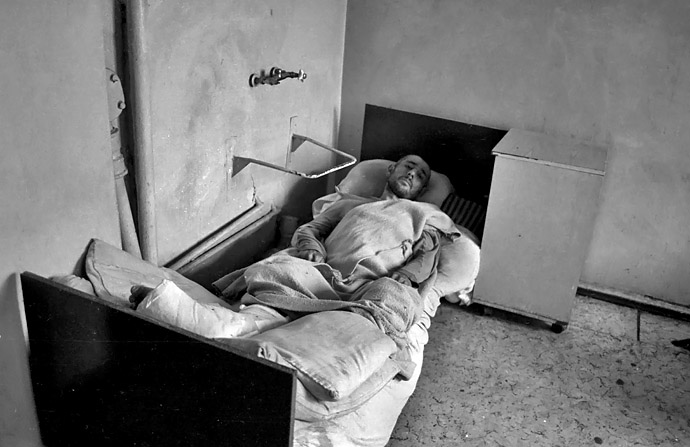
Azerbaijani Prisoner of War (PoW), Nagorno Karabakh © Onnik Krikorian 1994
In addition to the PoWs, who like many of their Armenian counterparts had been conscripted against their will, Azerbaijani civilians were also being held for exchange with Armenians taken hostage by the other side. Among them were children. Many, in fact, or at least until we discovered that not all of them were Azerbaijanis. They also included Armenians who had been allowed to play with the captives in an otherwise free environment. Until this day I remember being unable to tell them apart, and usually when I find myself observing the interaction between Armenians and Azerbaijanis at events held in Georgia and elsewhere.
And it’s true. Ethnic Armenians and Azeris are able to coexist together in countries outside the conflict zone, and they share much in common. While in Nagorno Karabakh in 1994 I photographed an Armenian wedding, for example, but the most recent marriage I shot was in 2009 in the ethnic Azeri village of Karajala in Georgia. Both, as well as every Armenian wedding in between, has been pretty much identical – from the food down to the music. I’ve also been working on documenting those villages in Georgia with a mixed ethnic Armenian and Azeri population and where both speak the other’s language.
That’s not to ignore the pain and suffering experienced by both sides in the conflict, but simply to say that in the years since the 1994 ceasefire it’s become more and more difficult for me to view the conflict as an ethnic one. Instead, and while nationalists and politicians on both sides appear to manipulate the conflict by insisting that it is, my main problem still remains being unable to tell most Armenians and Azerbaijanis apart. This is especially true for the children, which leads me on to my personal favorite photograph taken in Karabakh in 1994.
It was of a little girl, Gayaneh, close to Aghdam in the village of Khrmort. Aged well beyond her years with an expression scarred by the horrors of war, she broke into a smile only when I stuck my tongue out her from behind the camera. As she did so it was then that I found myself hoping that a lasting peace would come to the region. Unfortunately for Gayaneh and myself, as well as new generations in Armenia and Azerbaijan who are unable to remember the time when both sides did live peacefully together, we’re both still waiting…
—
Onnik Krikorian is a journalist and photographer from the UK based in Yerevan, Armenia. He is also the Caucasus editor for Global Voices Online and his own personal project amplifying alternative narratives on the Nagorno Karabakh conflict is at http://peace.oneworld.am. Follow the project on Twitter at @caucasusproject or join the Facebook Page at http://www.facebook.com/ConflictVoices.
The BBC Azeri gallery is at Fotojurnal: Qarabağ fotoqrafın gözü ilə.
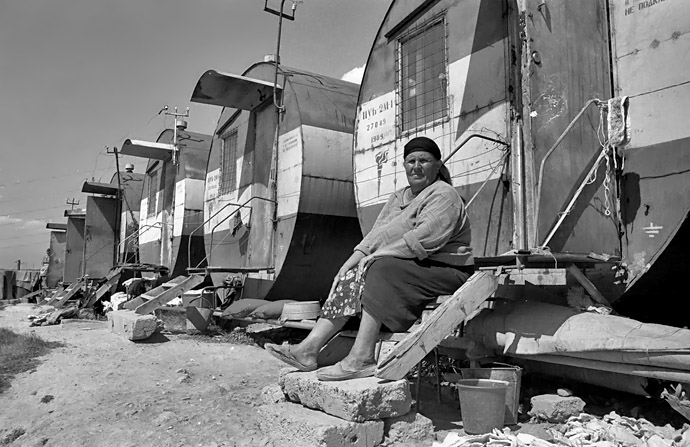
Refugee from Nagorno Karabakh, Armenia © Onnik Krikorian 1994
By Nicole Hunt
Though it’s sometimes difficult to keep track of which Silvio Berlusconi trial is currently in court, Monday sees the resumption of the most infamous of his four cases, in which he faces charges for abuse of power and paying for underage sex. The Italian Senate has approved a motion to move the case from Milan’s court to a special minister’s court, but the case remains in Milan while the Constitutional Court mulls the Senate’s request.
The Council of Europe Parliamentary Assembly opens, with more attention than usual being paid this time around. On Tuesday, the Assembly debates a motion that would recommend taking action against pre-natal sex selection in Europe, particularly in Albania, Armenia, Azerbaijan and Georgia, where the ratio of girls to boys in the population is dropping. On Thursday, Palestinian Authority President Mahmoud Abbas addresses the assembly.
Following a meeting of Eurogroup Finance Ministers on Monday, all EU Finance Ministers convene in Luxembourg on Tuesday, with the focus, as with many things this week, squarely on Greece. Discussions are also expected on an EU financial transaction tax, after the European Commission published proposals last week.
In direct response to the austerity measures being so closely watched by the European Finance Ministers, Greek public sector workers hold a 24-hour strike on Wednesday, calling the cuts ‘barbaric’. A general strike is also planned for 19 October.
Meanwhile, in Brussels, German Chancellor Angela Merkel attends the weekly meeting of the European College of Commissioners. At NATO headquarters, NATO Defence Ministers hold a regular meeting to discuss operational issues, with Libya topping the agenda.
Former Bosnian-Serb Army Commander Ratko Mladic is back in court in The Hague on Thursday. Since his last appearance on 25 August, Mladic’s lawyers have requested the names of all 7,000 victims of the Srebrenica massacre as part of their opposition to the indictment.
In Johannesburg, the African National Congress’ disciplinary committee resumes hearing the charges against controversial youth leader Julius Malema, who is accused of interrupting an ANC Officials meeting alongside three other men. Malema faces separate charges of bringing the ANC into disrepute and sowing divisions within ANC ranks, which will be heard separately once this case has concluded. It’s currently scheduled to last two days, but has already been delayed several times.
Friday is, oddly, both the 10 year anniversary of the beginning of the War in Afghanistan and also the date for the announcement of the winner of this year’s Nobel Peace Prize in Oslo. Anti-war activists hold mass demonstrations in London and Washington on Saturday, while the Peace Prize will be presented to the winner on 10 December.
Archbishop Desmond Tutu celebrates his 80th birthday and a year since he stepped down from public duties. Three days of celebrations are being held in Cape Town, and a new biography is being released to mark the day.
Spanish ‘indignant’ activists who have marched 1500km from Madrid are scheduled to arrive in Brussels on Saturday to hold a demonstration against unrepresentative politics. The protesters, who are joined by counterparts from across Europe, plan to hold a week of events, culminating in a large rally on 15 October.
Two elections take place on Sunday: voters in Poland elect 460 members to their lower house and 100 members to their upper house of parliament, while in Cameroon voters elect their president for the next seven years. Incumbent Paul Biya is only the second president since independence in 1960, and has held the post since 1982.
The Archbishop of Canterbury Rowan Williams is in Zimbabwe on Sunday, making him the first high-profile UK official to visit the country since 2001. The visit is part of a three-country pastoral tour which also includes Malawi and Zambia. Williams is expected to meet with President Robert Mugabe, and is scheduled to hold a special service for members of the Anglican Church who have not joined a splinter movement set up by the former Bishop of Harare.
]]>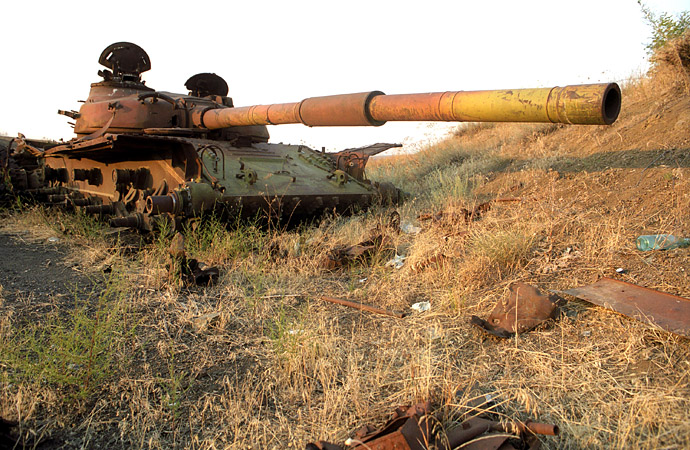
16.7 kilometers south of Lachin, Armenian-controlled Azerbaijan
© Onnik Krikorian for IWPR
Expectations of ending the long-running conflict between Armenia and Azerbaijan over the disputed territory of Nagorno Karabakh are high ahead of a meeting between the two presidents hosted by Russian President Dimitry Medvedev in Kazan on 25 June. The war fought in the early 1990s ended in a ceasefire agreement signed in May 1994. Over 25,000 died and a million forced to flee from their homes. Since then, according to The Economist, around 3,000 have died in cross-border skirmishes leading many analysts to argue that the conflict is anything but frozen. The International Crisis Group, for example, warned of the danger of an ‘accidental war’ earlier this year.
According to news reports and official statements, the hope is that Azerbaijani president, Ilham Aliyev, and his Armenian counterpart, Serge Sargsyan, will finalize and sign the basic principles that will form the basis for a final peace deal when they meet in Russia. Such hopes follow what many consider to be an unprecedented joint statement from the U.S., Russian and French presidents, representing the three countries tasked with mediating a peace deal under the auspices of the OSCE Minsk Group, at the G8 Summit in Deauville, France, last month.
We, the Presidents of the OSCE Minsk Group’s Co-Chair countries — France, the Russian Federation, and the United States of America — are convinced the time has arrived for all the sides to the Nagorno-Karabakh conflict to take a decisive step towards a peaceful settlement.
We reiterate that only a negotiated settlement can lead to peace, stability, and reconciliation, opening opportunities for regional development and cooperation. The use of force created the current situation of confrontation and instability. Its use again would only bring more suffering and devastation, and would be condemned by the international community. We strongly urge the leaders of the sides to prepare their populations for peace, not war.
[…]
We therefore call upon the Presidents of Armenia and Azerbaijan to demonstrate their political will by finalizing the Basic Principles during their upcoming summit in June. Further delay would only call into question the commitment of the sides to reach an agreement. Once an agreement has been reached, we stand ready to witness the formal acceptance of these Principles, to assist in the drafting of the peace agreement, and then to support its implementation with our international partners.
There are reportedly still some issues to resolve, but press reports indicate that the basic principles are not too dissimilar from the 1994 Bishkek Protocol signed just a few days before the ceasefire agreement came into effect. In particular, a peace deal would see the return of seven Armenian-controlled regions outside of Nagorno Karabakh proper as also demanded by UN Security Council Resolutions 822, 853, 874 and 884, an interim status for the disputed territory as well as the return of refugees and IDPs to their homes. What seems to have prevented an agreement to date, however, has been the timescale for such a peace plan and the mechanisms for determining Karabakh’s status.
In particular, Armenia would prefer to return the Azerbaijani regions of Lachin and Kelbajar only after final status has been determined while Azerbaijan wants them beforehand. Meanwhile, with Armenia demanding nothing less than full independence for Karabakh, Azerbaijan is more inclined towards considering a ‘high degree of autonomy’ within its territory in much the same way as Tatarstan functions inside the Russian Federation. Regardless, whatever its status, there is also the issue of how wide a strategic land corridor connecting Armenia and Karabakh through Lachin would be in addition to the makeup of peacekeeping forces and the nature of international security guarantees.
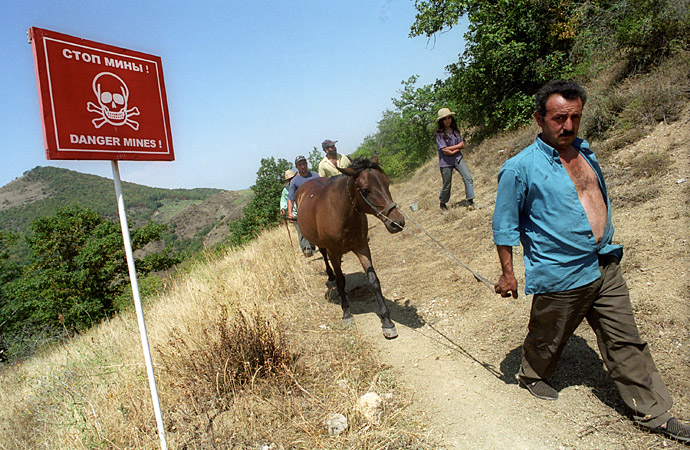
Suarassy, Armenian-controlled Azerbaijan © Onnik Krikorian for IWPR
Nationalists in both countries will undoubtedly oppose such a peace plan, with some Armenians objecting to the return of any Azerbaijani territory outside Karabakh and many Azeris unwilling to risk the chance that the basic principles could pave the way for full independence and the loss of key cultural sites such as Shusha, a formerly majority Azerbaijani town.
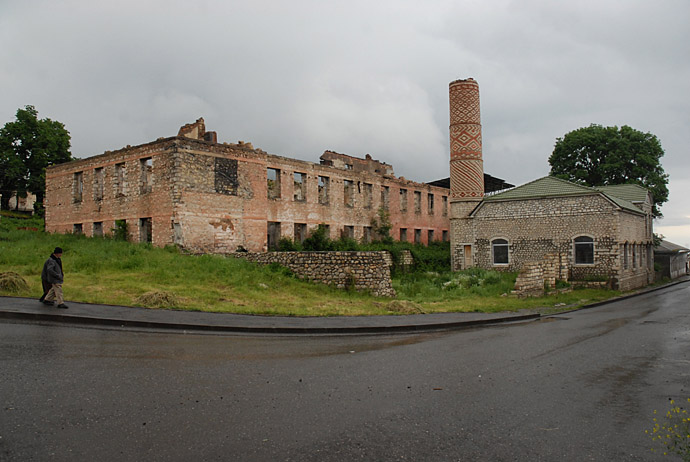
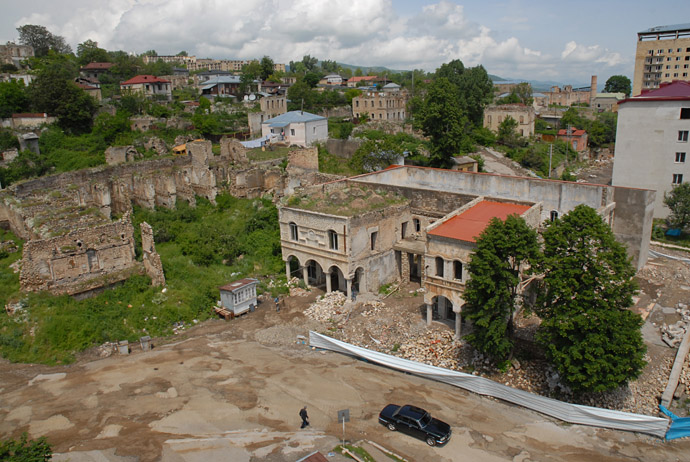
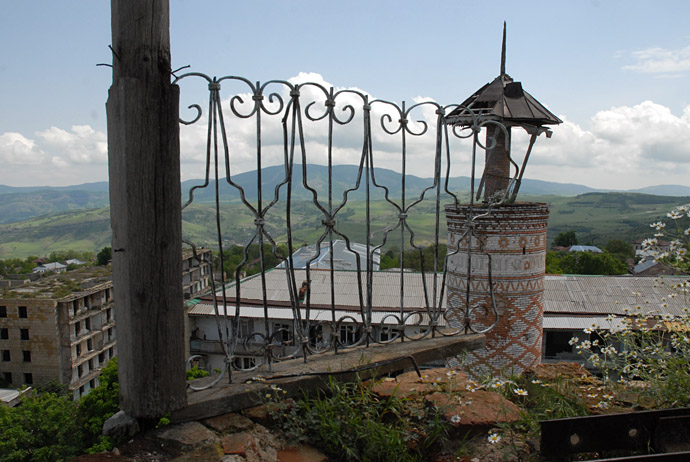
Shusha, Nagorno Karabakh © Onnik Krikorian for The National
Some analysts also remain skeptical, with Yerevan-based Richard Giragosian telling the New York Times that the expected initial outcome of the Kazan meeting was to merely sign a document renouncing the use of force to resolve the conflict. "The two sides are simply too far apart, and there’s no political will," he was quoted as saying. Similarly, some news reports quoting Azerbaijani officials as saying that they do not believe there will be a breakthrough at the Kazan talks.
Azerbaijan does not want to wage war over the Armenian-backed breakaway territory of Nagorno-Karabakh, yet it sees no chance of a breakthrough in talks later this month, its deputy foreign minister said.
[…]
Azimov said he was not optimistic for a breakthrough at the meeting of Aliyev and Armenian President Serzh Sarksyan in Kazan. Russian President Dmitry Medvedev will mediate.
"I do not have an optimistic view on what may happen in Kazan. I do not expect an agreement on basic principles in Kazan but I expect some more clarity on the most critical issues," Azimov said. He did not elaborate.
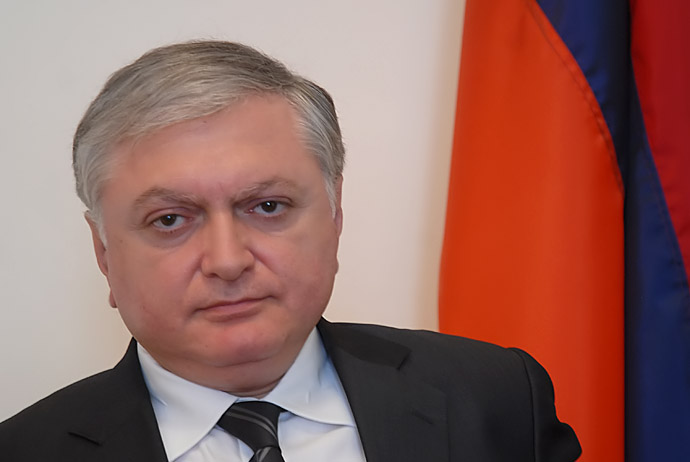
Foreign Minister Eduard Nalbandian, Yerevan, Republic of Armenia
© Onnik Krikorian for The Wall Street Journal
Even so, Armenian Foreign Ministry Spokesperson Tigran Balayan late last night tweeted that the sides were moving closer. Later, the same news was reported in the media.
Armenia and Azerbaijan reported significant progress towards the resolution of the Nagorno-Karabakh conflict following a meeting of their foreign ministers held in Moscow on Saturday.
The meeting was hosted and mediated by Russia’s Foreign Minister Sergei Lavrov in preparation for the upcoming Armenian-Azerbaijan summit which international mediators hope will result in a framework peace agreement on Karabakh.
The Armenian Foreign Ministry said Foreign Ministers Edward Nalbandian and Elmar Mammadyarov narrowed their governments’ differences on "a number of key issues of the basic principles of resolving the Nagorno-Karabakh conflict." "That draft document will be discussed at the trilateral summit to be held at the end of June," the ministry said in a statement.
For those following the Karabakh negotiations for the past 17 years, however, there seems no plausible reason not to agree and sign the basic principles later this month. Thomas de Waal, Senior Associate for Russia and Eurasia at the Carnegie Endowment and author of Black Garden: Armenia and Azerbaijan through Peace and War who recently made an impassioned plea for a third narrative of peace, puts it more bluntly.
[…] it comes down to political will. Are the Armenian and Azerbaijani leaders merely using the endlessly elusive Karabakh peace process as a device to keep the international community sweet and to demand loyalty from their populations, while never seriously wishing to sign a peace? Or are they genuinely committed to a peace agreement which would begin the long-term transformation of their region, but trapped by their own national discourse and political rhetoric and afraid to move forward? Or a bit of both?
This is why I welcome the line in the Deauville document which says, "Further delay would only call into question the commitment of the sides to reach an agreement." Or to put it another way, "We now have a workable document. Prove to us you are serious and sign it."
[…]
[…] as the Kazan meeting approaches, the stakes are raised for both peace and war in the Caucasus.
Onnik Krikorian is a British journalist and photojournalist based in Yerevan, Armenia, and has been visiting and covering the Nagorno Karabakh conflict since 1994. He has also fixed for TV reports on the Nagorno Karabakh conflict for Al Jazeera English and the BBC. He can be contacted via his personal project on Armenia-Azerbaijan relations here.
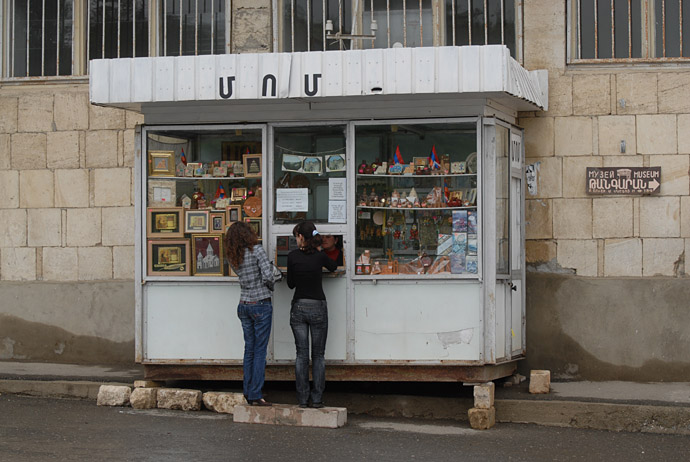
Shusha, Nagorno Karabakh © Onnik Krikorian for The National
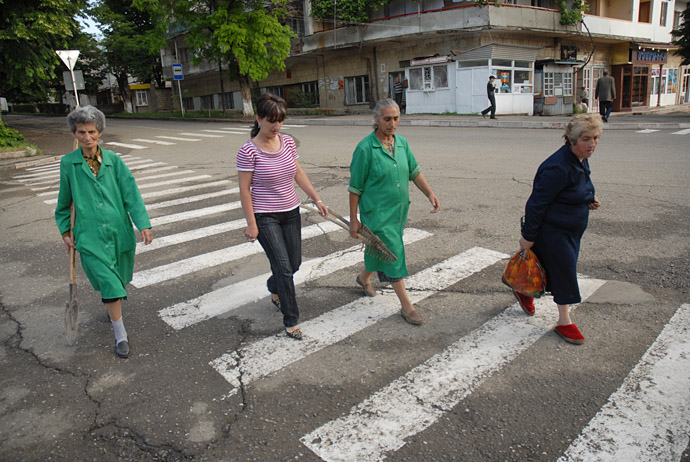
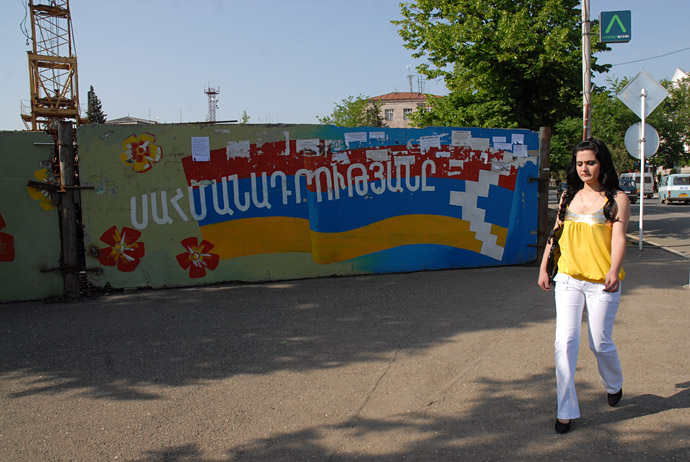
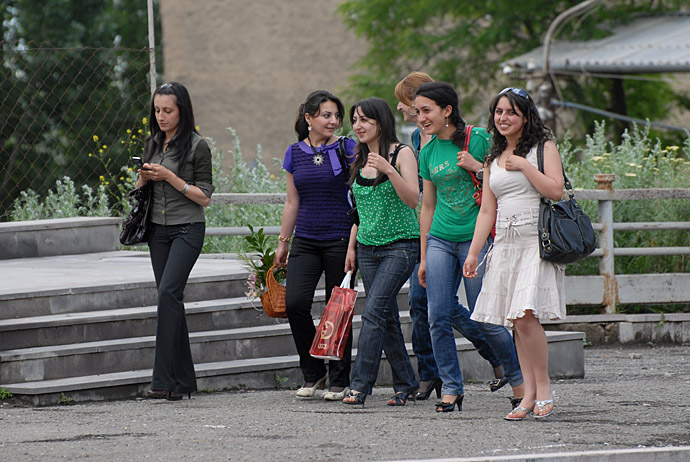
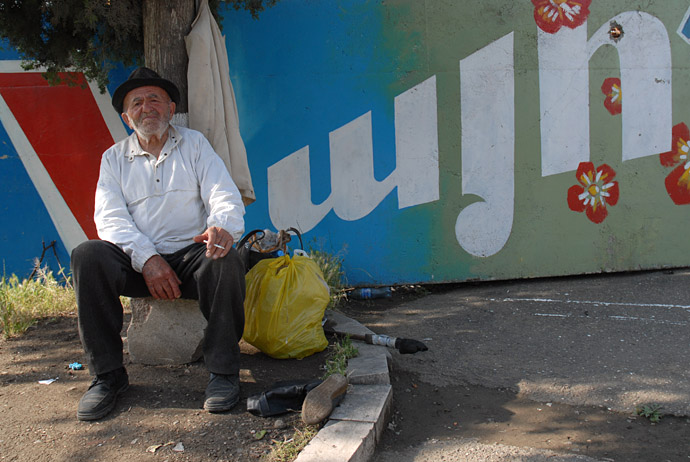
Stepanakert, Nagorno Karabakh © Onnik Krikorian for The National
]]>