On the eve of the UK’s first Global Conference for Media Freedom in London, this event will examine the new and current threats facing journalists – both online and offline – and explore potential solutions for protecting reporters’ lives and the freedom of information. It features journalist Lindsey Hilsum, author of In Extremis: The Life and Death of the War Correspondent Marie Colvin; journalist and author Peter Greste, who spent 400 days behind bars in Egypt on terrorism charges and Courtney Radsch, Advocacy Director for Committee to Protect Journalists.
The panel will also discuss the idea behind The Last Column, a new book and multimedia project supported by CPJ which collects the last stories published by 24 journalists who have been killed since 1992 as a way to remember those who gave heir lives to uncover the truth.
Moderator:
Jon Williams is Managing Director, RTÉ News & Current Affairs. He was previously Managing Editor, International News, at ABC News in New York where he shaped the organisation’s international news coverage and strategy and led ABC’s reporting of the war in Ukraine, the European refugee crisis, and the coverage of the ISIS terrorist attacks in Europe. Jon was the BBC’s UK News Editor during the 2005 general election and 7/7 terror attacks on the London transport network, coverage of which was recognised with a BAFTA award. He was also Deputy Editor of the BBC’s Six O’Clock News and BBC’s World News Editor, managing a staff of 200 people in 30 different countries. Before leaving the BBC, Jon oversaw the reporting of the civil war in Syria, which earned him a second Emmy, and was honoured with the 2013 International Prize by the Royal Television Society.
Speakers:
Lindsey Hilsum is Channel 4 News International Editor, and has covered many of the conflicts of recent years including in Syria, Ukraine and the Arab Spring. She was in Baghdad for the 2003 US invasion of Iraq, and in Belgrade for the 1999 NATO bombing. In 1994, she was the only English-speaking correspondent in Rwanda when the genocide began. She has won awards from the Royal Television Society and BAFTA amongst others, and received the 2017 Patron’s Medal from the Royal Geographical Society. She has just published a biography: “In Extremis – the Life of War Correspondent Marie Colvin”.
Peter Greste is an Award winning foreign correspondent and UNESCO Chair of Journalism and Communications, University of Queensland. He began his career as a foreign correspondent, covering the war in Yugoslavia and South Africa’s first democratic election before being appointed as the BBC’s Afghanistan correspondent in 1995. In 2013, he made headlines himself when he was arrested in Egypt on charges of terrorism and threatening national security. He spent 400 days behind bars and has since become a devoted advocate for press freedom. His book, The First Casualty, is part memoir, part history about the threats to modern journalism, and the fraught quest – and desperate need – for truth in the age of terrorism.
Courtney C. Radsch is advocacy director at the Committee to Protect Journalists (CPJ). She serves as chief spokesperson on global press freedom issues for the organization and oversees CPJ’s engagement with the United Nations, the Internet Governance Forum, and other multilateral institutions as well as CPJ’s campaigns on behalf of journalists killed and imprisoned for their work. As a veteran journalist, researcher, and free expression advocate, she frequently writes and speaks about the intersection of media, technology, and human rights. Her book Cyberactivism and Citizen Journalism in Egypt: Digital Dissidence and Political Change was published in 2016. Prior to joining CPJ, Radsch worked for UNESCO and edited the flagship publication World Trends in Freedom of Expression and Media Development, and managed the Global Freedom of Expression Campaign at Freedom House. She has worked as a journalist in the United States and Middle East with Al-Arabiya, the Daily Star, and The New York Times.
]]>“If there were such people in Chechnya, the law-enforcement organs wouldn’t need to have anything to do with them because their relatives would send them somewhere from which there is no returning.” Alvi Karimov, spokesperson for Chechnya’s President Ramzan Kadyrov
In April 2017, the Russian newspaper Novaya Gazeta – a paper who has had numerous editors murdered in previous years – broke the story of a ‘gay purge’, in which dozens of men were reportedly abducted, tortured and killed. The spokesperson for the Chechen President has denied all allegations, noting simply that “you cannot detain people who simply do not exist”. Disinformation and threats to brave organisations reporting human rights violations have made reporting difficult and dangerous. Since then, threats and attacks have continued with little sign of abating.
Join us for a panel to discuss the dangers for LGBT+ citizens in Russia – and why it’s been so hard to get the story out. The panellists will also look at the situation for refugees from Chechnya and around the world who’ve had to flee their homes as a result of persecution for their gender or orientation.
Chair
Jake Hall is a Sheffield-based freelance journalist whose work covers everything from porn and sex work to drugs and queerness. He is also studying for a PhD in Gender & Sexuality at the University of Birmingham. You can read his recent reporting for i-D on the situation in Chechnya here.
Speakers
Peter Tatchell has been campaigning since 1967 on issues of human rights, democracy, civil liberties, LGBT equality and global justice. In 2009, he co-proposed a UN Global Human Rights Index, to measure and rank the human rights record of every country – with the aim of creating a human rights league table to highlight the best and worst countries. On the first day of the 2018 World Cup, Tatchell was arrested in Moscow after staging a one-person protest near the Kremlin in support of LGBT+ people in Chechnya, highlighting the ‘homophobic witch hunts’ in the republic.
Moud Goba is a Zimbabwean lesbian, refugee, and founding member of UK Black Pride. She is an LGBT+ activist with more than 10 years of experience working with Black LGBT+ groups in the community, in addition to running her own small business. She is currently employed as a Project Manager for Micro Rainbow International, an organisation that addresses LGBT+ poverty across the globe. In 2015, Moud was named one of the top 100 most influential LGBT people in the Britain by the Independent newspaper, and was the recipient of Attitude Magazine’s Pride Award.
The Russian LGBT network was founded in April 2006. In October 2008, the All-Russian Conference of civic organizations in support of the LGBT movement was held in Moscow. During this conference, the network transformed into an interregional public movement. The Charter and Strategy were created, and governing bodies were elected. The network is an interregional, non-governmental human rights organization that promotes equal rights and respect for human dignity, regardless of sexual orientation and gender identity.
]]>
Documentary films often generate empathy in audiences, illuminating new perspectives and activating powerful emotions, but what happens next? How can empathy created by effective storytelling fuel action?
A panel of filmmakers and industry professionals will come together to discuss how they’ve carried their messages beyond the screen to incite engagement from viewers and response to social issues and injustices. Subjects to be discussed include storytelling methods for inspiring action, building campaigns through multimedia platforms, and engaging with the journalistic community.
Chaired by:
 Sarah Mosses, CEO of Together Films, a new agency working with social issue film content to reach new audiences. She helps filmmakers craft Impact Distribution Campaigns to increase both their social impact, audience reach and revenue potential. As an award winning producer Sarah’s debut feature documentary They Will Have To Kill Us First had its World Premiere at SXSW 2015. Sarah is a mentor for Documentary Campus, Eso Doc, Sheffield DocFest, working with filmmakers to identify strategies and partners for their films.
The panelists:
 Riddhi Jha is a UK Producer/Writer, educated at Royal Holloway, University of London. She started her career working in post-production and later began developing programmes for major UK television channels. Her debut in production was on a Channel 4 documentary ‘Why Don’t You Speak English?’ which followed the lives of those who had settled in the UK for the first time. Riddhi has since worked on the popular BBC television series ‘The Great British Bake Off’, has cast contributors and worked as Researcher for several productions for the BBC and Discovery and has scripted several commercials. “Riddhi came on board as an Associate Producer on India’s Daughter with the sort of commitment, energy and passion that a producer dreams of having at his/her side”, Leslee Udwin has said of her. Riddhi has a feature film in development as writer/producer – the story of a child bride.

Callum Macrae is a filmmaker, writer and journalist. An Emmy, BAFTA and Grierson nominee, his output has ranged from current affairs investigations to observational documentaries to polemics and he has filmed around the world, including Iraq, Sri Lanka, Japan, Haiti, Cote D’Ivoire, Uganda, Mali, and Sudan on subjects ranging from international and civil conflict to sex-workers rights. He headed the Channel 4 team nominated in 2013 for a Nobel Peace Prize for their work on Sri Lanka which culminated in his feature documentary, No Fire Zone. The product of a three year investigation, No Fire Zone is credited with playing a key role in convincing the UN Human Rights Council in March 2014 to launch a major international war crimes investigation into the events in the closing stages of the Sri Lankan Civil War.
 Patrick Hurley is Distribution Manager at Dogwoof, a leading film distributor and world sales agent specialising in high-profile feature-length documentaries. Primarily responsible for theatrical-release campaigns and audience-building, Patrick has worked on over 60 cinema releases for documentaries in the UK over the past four years. For this discussion, Patrick will share insights from Dogwoof’s campaign for Gabriela Cowperthwaite’s Blackfish for which Dogwoof handled UK distribution, international sales plus website and social media. Released in 2013, Blackfish has become a worldwide phenomenon, achieving an immense global audience and instigating a major impact on Sea World’s admissions and reputation for keeping orcas in captivity. Patrick will discuss how Dogwoof positioned and marketed the film to a broad audience while simultaneously leveraging support from key activist partners.
On Tuesday 27 November, a group of experts gathered at the Frontline Club to discuss the issues and nuances that surround the task of: Covering poverty in an indifferent world. This subject was recently explored by the BBC’s Why Poverty? series in an episode covering the campaigning efforts of Bob Geldof and Bono, and the resulting phenomena were also addressed by the panel.

Covering poverty in an indifferent world panel discussion
The Live Aid and Make Poverty History movements have been criticised for failing to fully achieve their ambitious aims. But today – as writer and activist Paul Vallely explained – millions of lives have been saved due to the public’s response and lobbying efforts in fora such as the Gleneagles G8 Summit in 2005.
“Most aid works, yet that’s not the perception as it comes across in the media.”
Paul Vallely also criticised an attitude of ‘cognative dissidance’ from issues of poverty as seen in the media today. This reflects, he said, an attitude of wilful ingnorance and cynicism currently adopted by many:
“They feel they want to defend the status quo which includes them not having to take any kind of responsibility for the fact that they are in a exploitative relationship with a lot of the other people in the world.”
On, the other hand, Andrew Hogg, head of media at Christian Aid, argued that in fact it is a matter of messaging:
“In terms of getting people to address that poverty, when it is presented in terms that they can understand, at the moment the door seems to be further open than it is closed.”
So what terms are currently being used to the most effect when communicating these issues? Lilie Chouliaraki, Professor of Media and Communications at LSE, proposed that currently a ‘post- humanitarian’ form of solidarity prevails. This approach, she said, moves the focus away from those who are suffering and onto the self:
“It’s about ‘us’, it’s about how we feel good, and by feeling good we are also contributing to other people’s well being… no distant sufferers are being portrayed in these campaigns, the others are completely left outside.”
It is within this paradigm that we find a significant use of celebrity she argued.
In defense of a celebrity focussed strategy, Jamie Drummond, co-founder and executive director of ONE explained:
“Every time somebody says ‘I hate it when celebrities are used to promote a cause, my answer is ‘well let’s try and get that cause, that mission, to get the same amount of coverage without a celebrity – what would it take? … Until we can do that, sometimes, we’ve got to live in the world we live in, we’ve got to use them, but we’d all like not to.”
As a closing thought, Lilie Chouliaraki added:
“Perhaps we can reverse the terms and then say ‘well why don’t we use that celebrity, that popular culture to celebritize people who are not celebrities yet, but who are doing incredible work… and make them the heros that they diserve to be.'”
Watch the full event here:
]]>On October 22 the Frontline Club hosted the London Premiere of The Invisible War, followed by a Q&A with Emmy-nominated producer Amy Ziering.
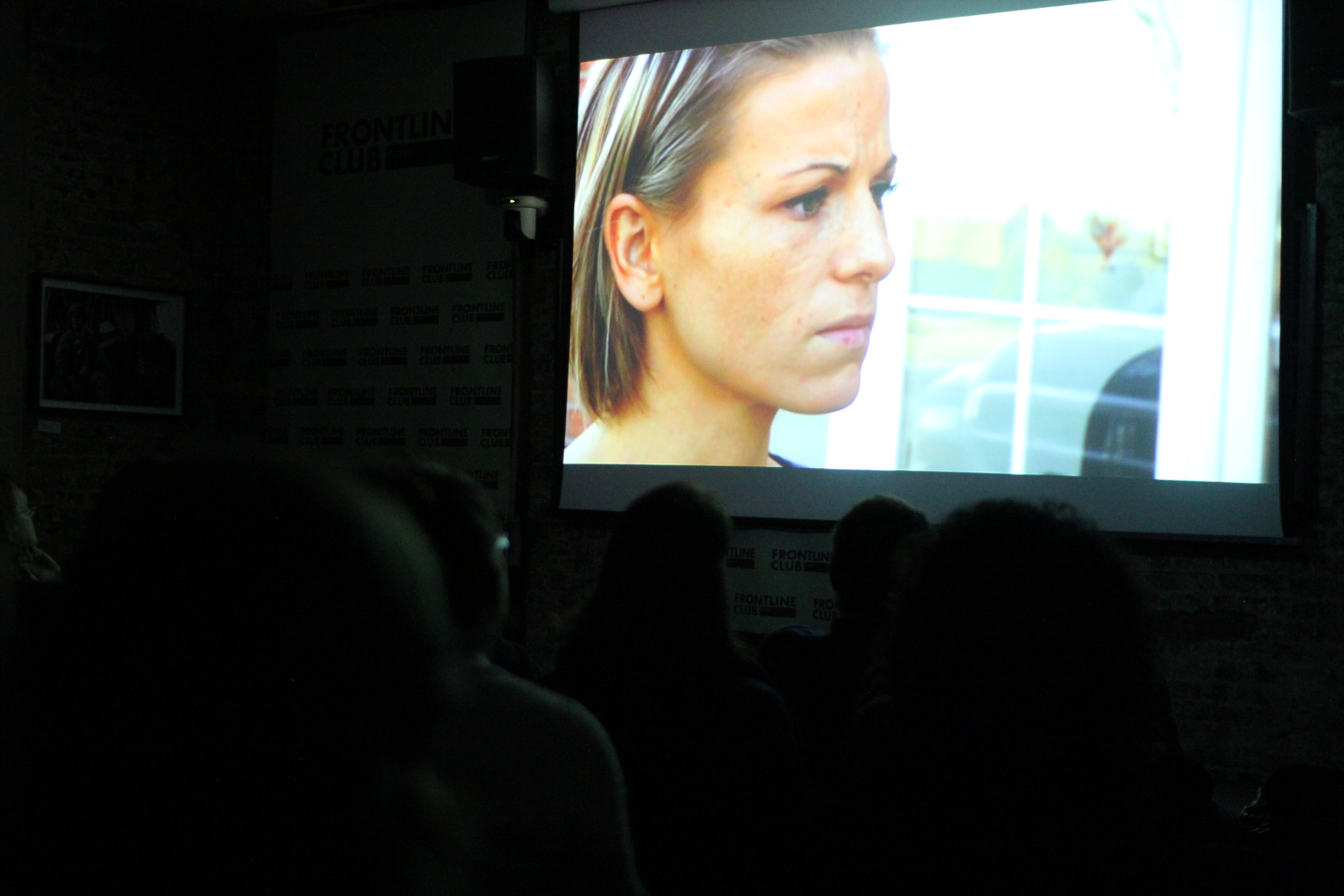
The Invisible War explores the devastating emotional and physical effects of sexual assault within the US military. In the Q&A producer Amy Ziering, explained how the emotional side of the film was balanced with the intellectual content through the differing, but complimentary approaches, that she and director Kirby Dick brought to the project:
“What I think is reflected [in this film] is that I came to it with a really intense emotional and passionate connection to each and every one of the survivors, I was mostly liaising and interacting with them more than he [Kirby Dick] was, and he came to it with an incredible sense of just outrage, moral outrage at [the] injustice. The film not only packs a powerful emotional punch but it also has a really, really substantial and intellectual argument, and I think it reflects both of our strengths in that way.”
One issue of injustice in particular that the film tackles is the inward looking nature of the American military judicial System:
“I wasn’t aware of the extent to which the American military judicial system sort of only answers to it’s own and really, you don’t have recourse outside … it is astonishing.” Admitted Ziering.
The strong influence of an individual’s Commander in the way that a sexual assault case is dealt with, she said, was something they particularly wanted to address through the film. Bias in favor of the attacker who may have close ties to the Commander is common, which means that the only channel for seeking justice is shut off. The campaign surrounding The Invisible War however, advocates for the military to be accountable to civillian authorities as an alternative:
“We are pushing now to try and get the military to acknowledge that oversight would actually only make them a stronger institution … that’s the message we are trying really hard to articulate.”
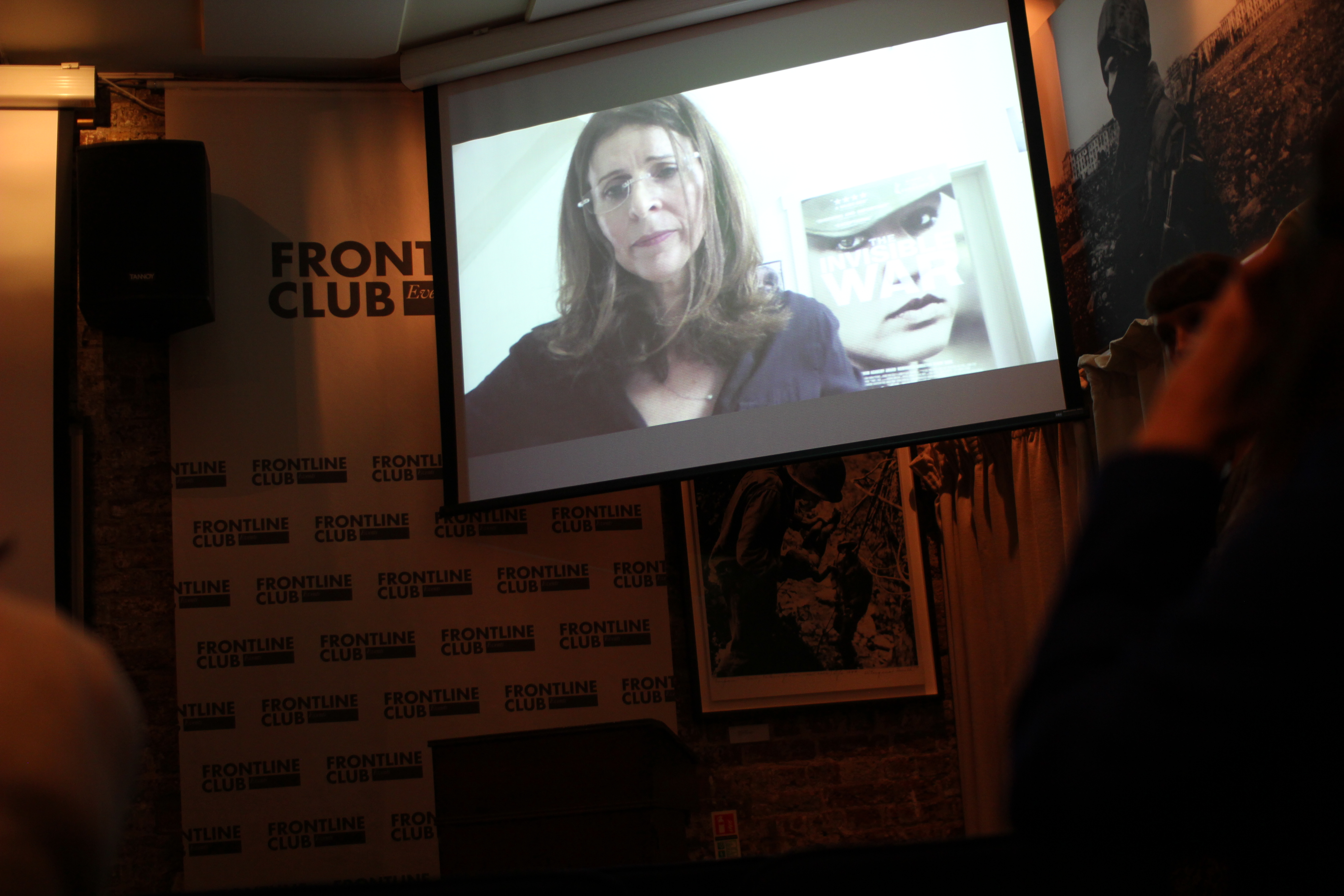
On being asked if there has been change in the aftermath of the film’s release, Amy Ziering was able to say yes. Through targeted screenings following the initial burst of interest when The Invisible War won the 2012 Sundance Film Festival Audience Award, they had reached several influential military figures:
“In doing my research I’d heard that you can legislate, can do grass roots, but if you don’t get the leadership on board in the military – nothing’s going to change … so to make a long story short eventually four of the five Joint Chiefs have now seen it including the head of the Joint Chiefs, General Dempsey.”
This, in turn, has affected policy and changed attitudes she explained:
“The army is embracing the film and we are on almost every army base – they bought it as a training tool.”
As a last note, Amy Ziering invited audience members to host screenings of their own:
]]>“You never know who knows someone and it really makes a difference.”
 Signs of weariness among some of the campaigners who first brought Darfur to the world’s attention. After six years of advocacy, of campaigning for an end to the conflict, there’s a moment of soul-searching. Nick Kristof, columnist for the New York Times, wrote the first article that catapulted the crisis into public consciousness. Now he is wondering where it all went wrong.
Antonovs are in almost daily action. Millions are still crowded into the aid camps where malnutrition and disease run riot. There are continuing skirmishes between rebels and government. Expelled aid agencies are having to cave to Khartoum’s demands in order to return to Darfur. And President Bashir continues to gallivant around the Arab and African worlds in defiance of an International Criminal Court warrant for his arrest.
Writing in the New York Review of Books, Kristof says he is worried that President Obama shows few signs of having the will to tackle Darfur…
To some extent, that’s a reflection on the Save Darfur movement and on scribblers like myself who took up the Darfuri cause. We have failed to foster the political will to bring about change. For all our efforts, the situation on the ground may soon become worse. A "Darfur fatigue" has set in, and the movement has lost its steam. And of course the movement was always compromised by its own shortcomings, from infighting to naiveté to the ubiquitous penchant of advocacy groups for exaggeration.
He’s right and wrong in pretty much equal measures. Naivete and exaggeration have been the downfall of the Darfur movement. And Kristof more than anyone has been guilty of this – continally taling about light-skinned Janjaweed, for example. At the same time though the Save Darfur movement has done an incredible job of keeping Darfur on the political agenda. The issue was featured in US Presidential debates and Obama has appointed a Sudan envoy.
The advocacy movement has even achieved its two main goals – UN peacekeepers and an ICC arrest warrant.
The advocates have been incredibly successful. The problem is that they have been pushing for the wrong solutions. If the likes of Kristof are having second thoughts then this can only be good for achieving peace in Darfur.
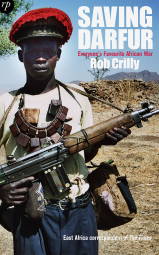
This issue is one of the main themes of my book, Saving Darfur: Everyone’s Favourite African War, due to be published by Reportage Press in November.
]]>