“We used to say health to the people. Now we say health to the rich only.”
On Monday 3 February 2014, the Frontline Club screened the UK premier of Putin’s Olympic Dream. Director Hans Pool shone light onto the crooked nature of Putin’s very own “fake smile.” Behind the facade of the Sochi Olympics is a world where the elderly are uprooted to make way for ice rinks and where 50–70% of migrant workers are deported without pay after months of exploitation.

Director Hans Pool. Photo credit: George Symonds
Pool began the Q&A by describing the film – initially conceived as part of The Sochi Project – as his most difficult project to date. He talked of run-ins with the FSB and interviewees who would refuse further participation after being threatened.
In response to a question about managing the risk to people who spoke on film, Pool said:
“When we were filming, they only told us stories they really wanted to tell us. There was no pressure from us to tell really bad stories.”
However, he was only able to find one human rights defender in Sochi willing to speak to the filmmakers:
“It was very difficult. . . . They are very scared to talk about those things. He was the only one.”

Asked by audience members about navigation of visa restrictions and the more opaque elements of the Russian authorities, Pool described the situation as, “always a kind of cat and mouse”.
A crew member in attendance told a tale of sabotage:
“There were a few cars chasing us all the time. I’m Russian actually, so I was kind of embarrassed because of that, so I went up to them and said, ‘What are you doing? You’re embarrassing me and all the Russians, and we know you’re following us.’ They just acted like nothing was going on.
“We were actually laughing about it all the time,” she continued, “and going to this one restaurant every evening. But when we got back we figured out that actually every night we were sitting in the restaurant they were entering our hotel rooms. They managed to destroy all the [memory] discs we were using to film. We just figured it out when we got back to Moscow and when we sent the discs back to the Netherlands they couldn’t open them. When the Sony company, in the end, opened them they saw they were scratched. . . . Well we flew back and filmed everything again in one day, . . . but that was really frightening.”

Project participant Valery Molozov
When asked whether members of the International Olympic Committee had seen the film, Pool said he did not know, however: “For me it’s a big question why they organise those Olympic games in countries like Russia or in Beijing. I really don’t understand. It has to do with a lot of money. You know there’s a lot of corruption.”
“What do you think about boycotting the games?” posed another member of the audience.
“Boycotting the games, I don’t know,” responded Pool. “You have to protest. If you’re going there as a supporter or as a politician you have to discuss these things. I think that’s very, very important. . . . I think it’s very important not to shut your mouth, but to discuss it and to get it in the open. It’s terrible for those workers, because they’re paying for the Olympic games, actually. . . . It’s really a shame out there.”

Putin’s Olympic Dream will be screened at the Lexi Cinema in London on 13 February. It will also be screened in Bratislava, Slovakia, on 10 February through the Frontline Club’s International Partners project.
]]>
Monday 11 March
On Monday, a two-day referendum on the political status of the Falklands Islands wraps-up, with the results due that evening. The referendum is largely symbolic, since the islanders overwhelmingly favour retaining their status as an Overseas Territory of the United Kingdom. The Argentine government, predictably, has already said it considers the poll a farce and it that it will continue to pursue its claim to sovereignty regardless of the outcome. Expect some chest-beating in Buenos Aires.

Also Monday, the US and South Korea are scheduled to begin an annual joint military exercise called Key Resolve. The exercise, which runs until 21 March and involves about 13,500 troops from the two nations, comes at a particularly tense time in the peninsula following the 12 February nuclear test in North Korea and the subsequent tightening of UN sanctions against the secretive communist state, which were approved on 7 March.
Monday is also a big day at the UN Human Rights Council session taking place in Geneva. Reports on North Korea, Syria, Myanmar (Burma) and Iran are all due to be considered on Monday. There is a press conference with the Commission of Inquiry on Syria scheduled. It follows the announcement last week that the number of refugees from the conflict has surpassed the million-person mark.
EU Foreign Ministers are also due to meet Monday, with Syria a particular focus. Joint UN-Arab League Special Envoy for Syria Lakhdar Brahimi will brief ministers at a lunch before the meeting.

Tuesday 12 March

Russian President Vladimir Putin, meanwhile, will host the leader of the breakaway Georgian region of Abkhazia for talks in Moscow. He is also due to meet today with the Armenian President Serzh Sargsyan who is making his first visit abroad since securing re-election last month. This choice of location for the trip is a clear affirmation of the close – and geo-politically significant – ties between Yerevan and Moscow.
Finally Tuesday, IMF Managing Director Christine Lagarde is scheduled to arrive in Algeria where she will pay a three-day visit.
Wednesday 13 March
On Wednesday, British Foreign and Defence Secretaries William Hague and Philip Hammond will be hosting their Russian counterparts Sergey Lavrov and Sergei Shoigu for talks in London, the first talks in this ‘2+2’ format. Syria is likely to be high on the agenda, although cynics might suggest the UK has little influence over Russia in this, or any, regard. Another topic that may be discussed privately is the ongoing inquest into the murder of Alexander Litvinenko (a procedural hearing in that inquest takes place on Thursday).

Finally, in the United States the Senate Armed Services Committee is scheduled to hold what is expected to be a highly emotive hearing on sexual assault in the military, with three of the witnesses giving testimony at the hearing being victims of abuse themselves.
Thursday 14 March
EU leaders will descend upon Brussels again on Thursday for their second meeting of the year, and the first since the Italian elections that failed to produce a clear victor and threaten to derail what was looking like a significantly more positive year for the region. It will also be UK Prime Minister David Cameron’s first opportunity to meet with counterparts since his Chancellor George Osborne failed to extract any significant concessions on the proposed cap on bankers’ bonuses that is scheduled to take effect in 2014.

Finally, Russian President Vladimir Putin will hold talks with the Palestinian leader Mahmoud Abbas in Moscow. Russia currently holds the rotating presidency of the UN Security Council and has said it wants to make progress in the Middle East Peace Process a priority of its presidency.
Friday 15 March
The Italian parliament is scheduled to reconvene on Friday following the elections held at the end of February. Discussions on possible coalitions will begin in earnest the following week – likely on 21 March – hosted by outgoing Italian President Giorgio Napolitano. Many fear further elections later in the year are inevitable.
Friday also marks two years since the start of the Syrian uprising which has since descended into a horrific bloodbath which the international community appears powerless to stop.
Weekend

Saturday also marks the deadline for Israeli Prime Minister Benjamin Netanyahu to form a coalition, after he was forced to seek a two-week extension on March 2. Although both Israeli and US officials have issued public declarations suggesting a failure to form a government would not imperil the visit the following week by Barack Obama, others are not so sure.
Finally, as noted earlier, the 12th National People’s Congress closes in Beijing, with votes on draft resolutions and a closing ceremony, marking the culmination of the once –in-a-decade leadership transition in China.
Some images courtesy of Vasily Smirnov / Shutterstock.com
]]>It’s now one year since Russia recognised Georgia’s breakaway regions of Abkhazia and South Ossetia as independent states.
The first time I visited Abkhazia was in December 2006 to produce radio features.
I had always wanted to visit the region during summer. This time I was keen to not only experience what brings Russian tourists and their much needed roubles to Abkhazia’s Black Sea coast, but also try to get a sense of what’s happened inside the territory in the past year.
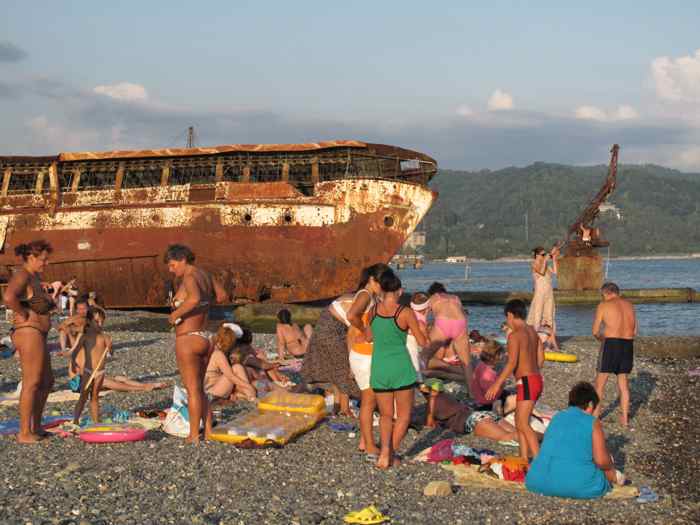
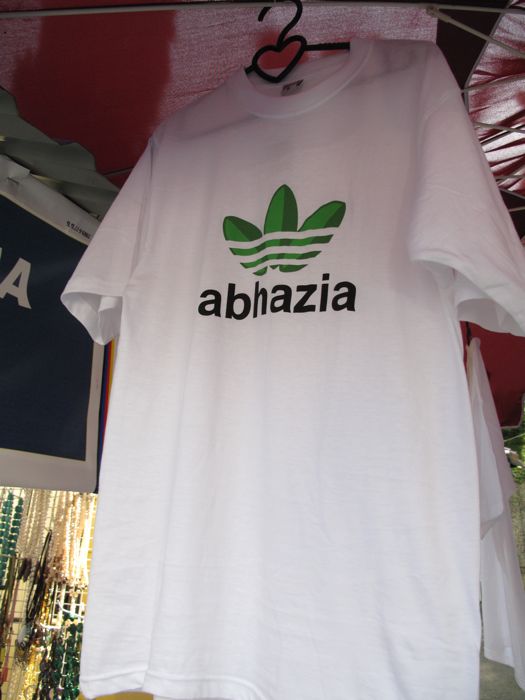
Abkhazia is not the Côte d’Azur, but if you’re after a cheap flop and drop beachside holiday, plenty of hearty shashlik or trout, cold beer and smooth vodka, then Abkhazia would fit the bill.
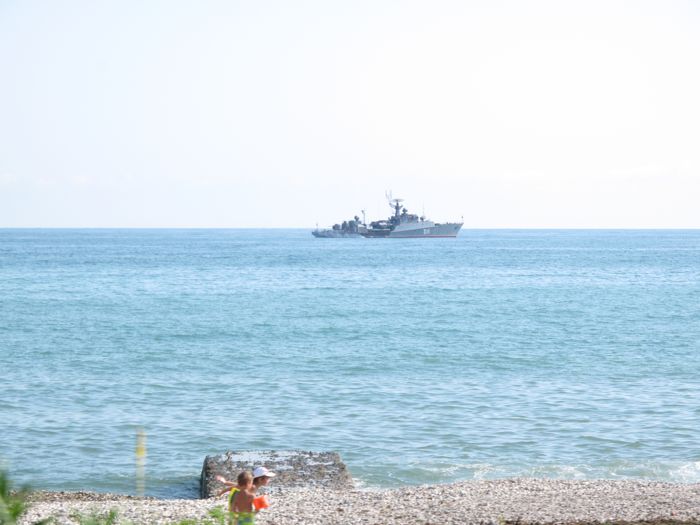
Unfortunately the closest I came to a quick dip at the beach was filming two Russian anti-submarine corvettes anchored of the coast near Novy Afon. My bad luck for not getting up early for a dawn patrol paddle.
Russia has announced it will begin providing protection for merchant vessels trading with Abkhazia. That’s the sort of news that will go down well with local taxi drivers complaining of fuel shortages after Georgia’s coast guard recently intercepted a tanker.
Early in the trip we had the chance to interview Abkhazia’s Vice Foreign Minister, Maxim Gunjia. He says that since Russia recognised Abkhazia as independent and pledged to offer protection, Abkhazians have more confidence to invest and develop businesses.
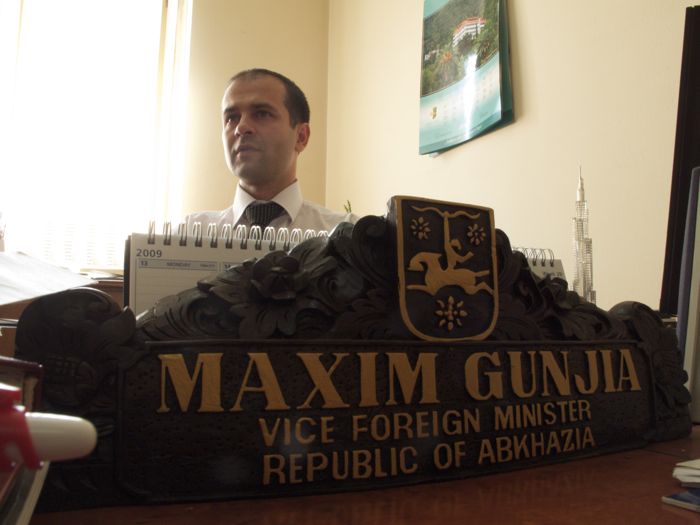
Gunjia says the Russian-Abkhaz relationship is broad and rejects the idea that Abkhazia is just a buffer state.
Max Gunjia clip by fieldreports
Matthew Collin’s online report has more and you can also watch the accompanying video feature.
(Photos: Guy Degen)
]]>