By Nicole Hunt
New week, New Year – the Chinese Year of the Dragon, that is.
But while weeks of celebrations are kicking off in China, the mood will be considerably less celebratory in Brussels, where the EU foreign ministers and euro area finance ministers are holding monthly meetings. The Foreign Affairs Council is scheduled to discuss new sanctions against Iran, including the possibility of imposing sanctions on Iranian oil, while finance ministers will hear from Italian Prime Minister Mario Monti on his government’s plans for economic and labour reforms.
In Cairo, the Egyptian parliament holds its first sitting following marathon elections between November and January. The need for re-votes and subsequent delays in results reporting means the full make-up of the National Assembly is still unknown, though it’s likely to be dominated by the Muslim Brotherhood.
Libyan authorities have until Monday to submit information to the International Criminal Court in The Hague on the conditions of Saif al Islam Gaddafi’s arrest and detention, and to notify the court whether they intend to hand him over for trial. Gaddafi has been indicted by the ICC on charges of crimes against humanity.
Spanish Magistrate Baltasar Garzon, who went on trial last week on charges of illegal phone tapping, is back before the court on Tuesday to face the allegations that originally saw him suspended last spring. Right-wing lobby groups have accused Garzon of overstepping his judicial authority by investigating disappearances under Franco’s regime despite a 1977 amnesty.
US President Barack Obama delivers the final State of the Union address of his first term in Washington. While no details of the speech have been released (other than that Obama will follow it up with a five-city tour through the battleground states of Iowa, Arizona, Nevada, Colorado and Michigan), the focus is likely to be on the economy and employment.
German Chancellor Angela Merkel opens the World Economic Forum Meeting, better known as Davos, on Wednesday. The annual gathering attracts heads of state and government from across the world, with nearly 40 leaders expected to attend this year alongside IMF Managing Director Christine Lagarde, World Bank President Robert Zoellick, Arab League Secretary General Nabil El Araby and Archbishop Desmond Tutu.
Despite the star-studded Davos meeting, all eyes will be on Cairo as the Egyptian revolution marks its first anniversary. However, the mood is likely to be less celebratory than would be expected, as protesters have grown impatient with the rate at which power is being transferred from the military to civilians, as well as the ongoing trial of former President Hosni Mubarak, and activists have continued to clash with police in recent months.
Thursday is a much quieter anniversary, marking one year since the first, tentative protests in Syria, where the death toll has now reached somewhere between 5,000 and 6,500. Widespread demonstrations did not take place in Damascus until 15 March, which is considered the beginning ofthe Syrian uprising, but smaller gatherings were held on 26 January, inspired by Tunisia and Egypt.
Thursday is also seen as a key deadline in the Middle East Quartet’s plan for the progress of peace talks between Israeli and Palestinian officials. The parties are supposed to have put forward ‘comprehensive proposals’ on border and security improvements by now, and Palestinian Authority President Mahmoud Abbas has demanded that a settlement freeze be put in place.
Senegal’s Constitutional Court is scheduled to make a decision on Friday as to the eligibility of candidates for the country’s 26 February presidential election. Incumbent President Abdoulauye Wade maintains that since he was first elected in 2000, three years before the introduction of a two-term limit, he is still eligible to run for another term (despite re-election in 2007). Singer Youssou N’dour is also among candidates.
After a delay of over a month, Silvio Berlusconi’s trial for paying for underage sex resumes in Milan. Both sides will be looking ahead to a 7 February hearing, during which the Constitutional Court is due to hear a motion brought by the Senate requesting that the case be moved to a special minister’s court.
The Cuban Communist Party holds its national convention on Saturday, the first since Raul Castro succeeded his brother Fidel as the Party’s Secretary General last year.
Saturday also marks 100 days since the death of Libyan leader Muammar Gaddafi.
With the lower house elections over and Parliament in place, Egypt begins the first round of voting for the upper house or Shura Council on Sunday. A second stage of elections will be held 14-15 February, with runoffs scheduled for both stages, if necessary. Plans for a three-stage vote, in line with the lower house elections, were abandoned in favour of a shorter timeline that will see the Shura Council sitting by 28 February.
]]>From 25 January the world watched as protesters took to the streets across Egypt and gathered in Cairo’s Tahrir Square day after day before their demands were finally met on 11 February and President Hosni Mubarak resigned.
Egyptian author, political and cultural commentator Ahdaf Soueif will be joining us in conversation with BBC presenter Mishal Husain, to discuss her experiences at the heart of the protest in Tahrir Square during those momentous 18 days, looking at the roots of the pro-democracy movement and addressing the question of where her country goes from here.
Born in Cairo and educated in Egypt and England, Ahdaf Soueif is the author of two collections of short stories; Aisha (1983) and Sandpiper (1996), two novels; In the Eye of the Sun (1992) and the bestselling The Map of Love which was shortlisted for the Booker Prize for Fiction in 1999. And a collection of essays, Mezzaterra: Fragments from the Common Ground (2004).
]]>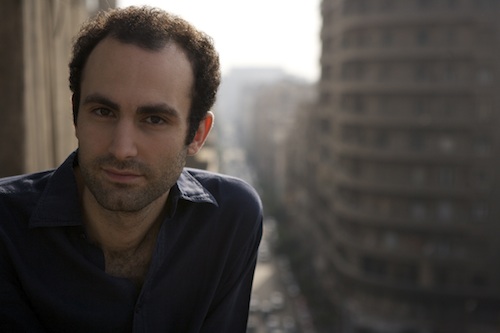
British-Egyptian actor and producer Khalid Abdalla flew from London to Egypt soon after it became clear that the protests of 25 January were gathering momentum and was there for the Friday ‘Day of anger’ on 28 January.
The Kite Runner star, whose other credits include Green Zone and In the Last Days of the City, was memorably interviewed from Tahrir Square by Channel 4 News’ Jon Snow while his father Hossam Abdalla was in the studio.
The co-founder of Zero Production, a film and documentary production house based in Cairo is currently setting up a non-profit media centre called Mossireen (Adamant) to support filmmakers and citizen journalists through the revolution.
Like everyone in Egypt I did not expect anything to happen like in Tunisia
Tunisia, it felt to me, had massively rejuvenated the narrative of popular protest in the Middle East, but having filmed almost every protest in Cairo over the last two years as part of an independent film called ‘In the Last Days of the City’, I thought Egypt’s watershed moment was a while away.
I discovered I was completely wrong at about 5pm, on a phone call to a Lebanese friend who asked me if I’d seen the images of Tahrir. It wasn’t until the following afternoon that I felt the full force of what was coming.
The images of Tahrir being dispersed and news of my friends continuing their protest through to 6am in Shubra was heartening. It was the shock of protests continuing the following day that made clear to me that this time was different. I’d seen plenty of demonstrations in Cairo and faced a minor arrest once. I’d never seen demonstrators take on the authorities no matter what, directly in the line of fire.
I booked my plane knowing that Friday would make or break the movement
From that moment I became a protester and an activist. Prior to that I was neither a blogger, nor a political activist, I had no Facebook account, and I dreaded the idea of Twitter. I had on the other hand been a filmmaker and actor working in the alternative scene in Cairo. Which is to say that the fight for a new Egypt, in my opinion, is not and was not just a political one.
It is a movement spearheaded by everyone who was willing to make a personal sacrifice of whatever kind to create their own version of Egypt, against and despite Mubarak’s regime as it was, and sadly, still remains.
Prior to 25 January I couldn’t bear the idea of new media in my life
Being ‘followed’, or sought as a ‘friend’ was not something I wanted because my privacy was important to me, not to mention the fact that even with a smartphone addiction, I suffered from a regular email backlog that made me guilty enough.
When the revolution came, it became clear that social media was a way for me to join the dots. It took a while because within hours of my arrival in Cairo, all forms of communication had been cut.
Social media helped manage the balance of access to truth
The need to bear witness and share opinions in a political context in which the voice of the majority is opposed by the lies of state media at worst, and the economic interests of commercial media at best, means free social media is essential.
Without the myriad of bloggers and individuals using Twitter, Facebook, and YouTube, fighting alongside high quality reporting made by respectable journalists across all forms of media, the media war in this revolution would have been lost.
I joined Twitter and Facebook because it became clear to me that they were the best tools I had as an individual to access and benefit from as many people as possible. It was also an opportunity to do my bit in trying to convince others to protest or at least let them share in my thoughts.
In my opinion, the power of new media has been both over and under-estimated in its importance to what happened in Egypt. Under-estimated as a source, over-estimated as a mobilising force.
The Facebook generation did not create what happened in Egypt
A second and third generation of political activists used social media as an important tool in a heavily weighted fight that was only counterbalanced when consensus on the street about an unjust regime became fearless. Tunisia broke the back. Social media helped the frenzy build in the run up to 25 January and fought as best it could against the state media afterwards.
But it was the spirit of generations of activists, demonstrators, workers and unions fighting as a shunned minority, under the most difficult circumstances, that meant a flame remained to light the fire when the time came. Mubarak’s idiocy, alongside that of his regime’s, was a big help too.
As we look forwards, the current situation puts into context both the power and limitations of new media. Despite the many gains won by the 25 January movement, the regime still stands, for the moment.
New media has temporarily lost the power of its audience
Consensus doesn’t exist anymore about anything – strategy, parties, the army, even torture. With the movement having lost the power of consensus, Facebook has lost its ability to draw primetime audiences, if you like. Meanwhile, the state remains in the hands of the regime and its interests (at home, and abroad), and most people are worrying about how to feed their families.
It is the army that hangs in the balance
From the very beginning they have had to choose between the millions that rose up, and the regime and its interests. Whenever they have chosen to be an obstacle to people’s demands for social justice, civil liberties and democracy, they have been met with an outcry that has forced them to give ground, and threatened to turn them into a target.
If they continue as they are, torturing, putting civilians on trial in military courts, banning protest and not bringing heads of the former regime to justice, I’m convinced that revolution stage two will come. An unstoppable force was unleashed on 25 January, in a just cause.
The present challenge is to organise ourselves
That is starting to happen. The losses our movement has incurred have been on account of our inability post-February 11th to act in unison, with clarity of purpose. Once we have achieved that, finishing this will be a matter of months, if not days.
]]>
Egyptian/British film-maker Omar Robert Hamilton, who can be seen in the above video speaking at a Democracy Now! event with his mother Ahdaf Soueif was in Washington DC on 25 January when Egyptians took to the streets but after four days he flew to Cairo to take part in, and document, the Revolution.
For four days I sat, paralysed, in Washington DC. From 25 January, the day the Egyptian revolution began, my life was no longer my own. For four days I watched Al-Jazeera, feeling incredibly proud and wretchedly guilty. While my mother was tear-gassed and my cousins raced medical supplies to field hospitals and my friends were arrested and dumped in the desert, I was sat watching television.
I try to be useful, but standing outside the White House and pressing re-tweet every other breath just doesn’t do it. On Saturday 29 January – the day after the people beat the police and central security forces in street battles across three cities – I get on a plane.
Earlier that month Hamilton had been in Sudan, filming a documentary in the northern Sahara and emerged from days in the desert to the news that Tunisia’s Ben Ali had stepped down.
Two days later I was driving through downtown Cairo, looking anxiously for signs of a domino effect. There were none. In the evening I was sat in the same faux Parisian bar I always sit in, with the same friends, everyone jokingly asking if a revolution had been sighted.
I left for America, to a job in DC. Two days later Tahrir Square was flooded with people, and my paralysis set in.
Hamilton, the producer of the Palestine Festival of Literature, who is currently in pre-production on his third short, Though I Know the River is Dry, says by the time he got to Egypt the internet had been shut down and new media "felt important in getting messages out to the world" rather than for internal organisation:
Twitter felt useful to try and counter the panic that was being spread abroad. Though, at the same time, one of the most gratifying things about the Egyptian revolution was that it was irrelevant what Western leaders did or said. In the middle of Tahrir square, Cameron and Obama’s words felt more out of touch than ever. So we weren’t appealing to Western public opinion, just keeping people informed.
An account by Waleed Al Musharaf of the 2 February attack on protesters by pro-Mubarak supporters Justice makes for a clear blue sky was one of the most significant articles he read during that time and "alone makes him one of the most significant literary voices to emerge from the revolution" says Hamilton.
Inspired by the "collective, organic, open-source, inclusive, revolutionary body politic that was lying dormant in the Egyptian people" Hamilton believes the biggest challenge ahead will be "keeping the momentum up" and wants to return to Egypt to live:
]]>When I first got to Tahrir from America, Egypt’s transformation was revealed in an instant, as an old man arched down, one hand holding his weight on his knee, the other sweeping up a small pile of trash. Without fuss, without ego, he was just doing his bit. And so was everyone else.